

 中文简体
 English
 русский
 Inquiry
Don't hesitate to send a message
I. Introduction: Solving the "Impossible" Task The phrase "fitting a square peg into a round hole" is a universal symbol...
READ MOREContent
Walk into any dealer aisle and one fact settles most of the sizing debate: every impact driver on the shelf takes the same 1/4-inch (6.35 mm) hex quick-change bit, from a compact 12-volt unit up to a full-size 18-volt flagship. So when someone asks what size impact driver do I need, the chuck is never the answer. Fastening torque is, and so is the size of the bit or socket that torque has to travel through.
Getting this wrong costs money in both directions. An under-sized driver stalls halfway through a 1/2-inch lag screw and drains batteries doing it. An over-sized one strips cabinet screw heads and snaps 1/4-inch shank bits before the clutch ever slips. The sections below separate the three values buyers confuse, the torque each tool class actually delivers, and the fastener sizes that decide the answer.
Impact driver size resolves into three separate values, and only two of them are selectable: the chuck interface, fixed at 1/4-inch hex across the entire product category; the fastening torque class, which runs from roughly 110 Nm on compact 12-volt tools to about 260 Nm on current 18-volt models; and the bit or socket size, which is dictated entirely by the fastener head in front of you.
Impact driver sizing is a torque-matching exercise, not a dimension-matching one. Because the tool-to-bit interface is a fixed 1/4-inch hex shank, the only variables a buyer controls are the tool's fastening torque and impact rate, plus whatever driver bit, socket adapter or drill bit is loaded into that hex socket.
Voltage labels complicate the picture without changing it. A 20-volt maximum pack and an 18-volt pack carry the same nominal cell configuration; the difference is shorthand for peak voltage under no load. Torque class is set by the motor, gearbox and impact mechanism, so published in-lb or Nm figures are the only comparable specification.
| Value | Fixed or selectable | Typical range | What it decides |
| Chuck and shank interface | Fixed | 1/4 in (6.35 mm) hex | Which accessories fit at all |
| Fastening torque | Selectable | 110 to 260 Nm | Whether lag screws and bolts seat fully |
| Bit and socket size | Selectable | #1 to #3 Phillips, T15 to T40 Torx, 6 to 19 mm hex, 1/4 to 1/2 in square adapters | Whether you strip heads or snap shanks |
Size the driver against your heaviest fastener and then add 30 to 40 percent headroom. A tool rated at exactly the torque a fastener needs spends every cycle at its limit, which is where motors overheat, batteries sag and impact mechanisms wear fastest.
Manufacturer torque figures are measured at the anvil under laboratory conditions, not at the bit tip through a warm gearbox. Treat published numbers as a ceiling rather than a working figure, and keep the heaviest fastener on the job at or below about 60 percent of the rated value.
Torque demand of common fasteners against a 205 Nm impact driver
Bars are scaled against a 205 Nm ceiling, roughly the top of the current 18 V impact driver class. Driving torque varies with wood species, pilot hole size and thread form.
Impact rate matters as much as peak torque on lag screws. A driver running at 3,600 impacts per minute seats a 3/8-inch lag screw in softwood in a few seconds; the same torque delivered at 2,500 impacts per minute takes noticeably longer and heats the tool. On repeat production work that difference shows up in cycle time and battery swaps, not in the torque specification sheet.
You need a square-drive tool only when the target is a nut or bolt head instead of a screw head. A 1/4-inch hex impact driver with a socket adapter covers light assembly work and fasteners up to roughly 100 Nm, but anything heavier belongs on a 3/8-inch or 1/2-inch square-drive impact wrench, where the socket locks onto an anvil rather than a bit holder.
The differences between the two tool families run well beyond torque output. Anvil geometry, socket retention and duty cycle all change, and mixing them up on a specification sheet is how crews end up with a driver that cannot break a rusted bolt loose. Anyone specifying tools for a mixed trade crew should review the practical differences between an impact driver and an impact wrench before committing to a single battery platform.
The bit size you need is set by the fastener head. Phillips #2 covers the widest band of common screws from #8 to #10, T25 covers most composite decking and structural screws, and a 5/16-inch hex driver or an 8 mm nut driver handles the hex-head lag screws used in framing.
Shank diameter is the one dimension that genuinely constrains compatibility. Standard bits use a 1/4-inch hex shank; heavy-duty masonry bits sometimes use a 5/16-inch shank, which will not fit a 1/4-inch quick-change chuck. For impact use, choose bits with a torsion zone, a section of reduced shank diameter that absorbs peak torque instead of passing it straight into the tip.
Pilot holes matter more than bit branding on lag screws. A pilot hole drilled to the shank diameter rather than the thread diameter cuts driving torque substantially and keeps the driver out of its stall range. In framing lumber, a single-flute auger bit clears chips fast enough to drill those pilot holes in one pass, which is the difference between a driver that finishes the screw and one that smokes its way through it.
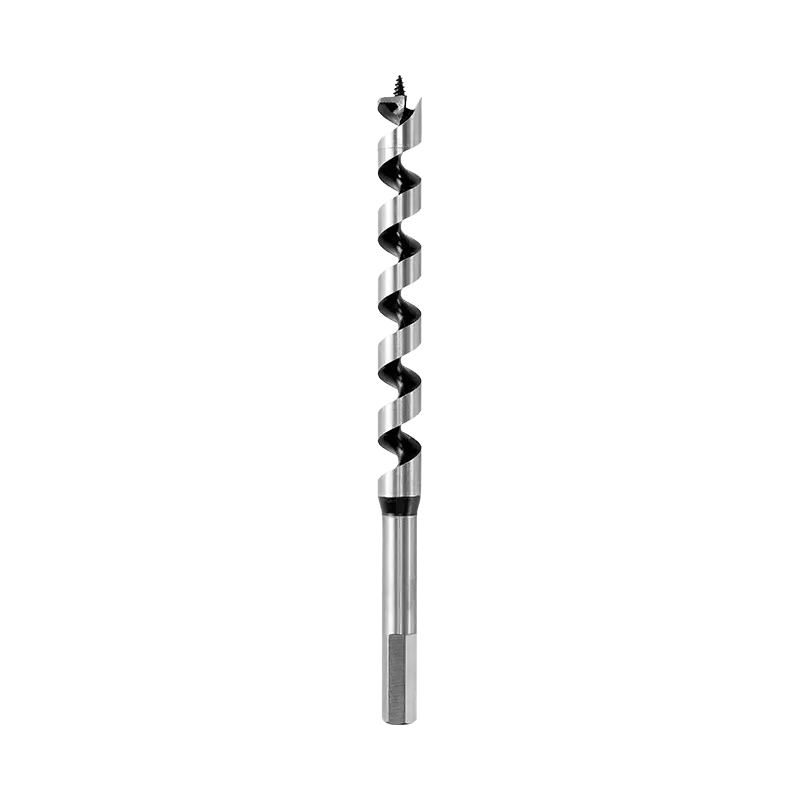 Single Flute Auger Bit for Wood BoringA wood-boring bit with self-feeding screw point and hex shank, suited to pilot holes and fast chip clearance in framing lumber.View Product →
Material changes the accessory, not the driver's size. Wood screws and lag bolts sit comfortably inside an 18-volt driver's range, steel is a drilling operation that needs the correct bit geometry and cutting speed, and concrete anchors need an SDS-plus rotary hammer rather than an impact driver.
Steel is where buyers most often reach for the wrong tool. A 1/4-inch hex driver turns a bit at impact speed, which work-hardens stainless and burns the cutting edge off high-speed steel in seconds. Steel wants a drill running at the correct surface speed with a split-point bit that starts on contact without a center punch.
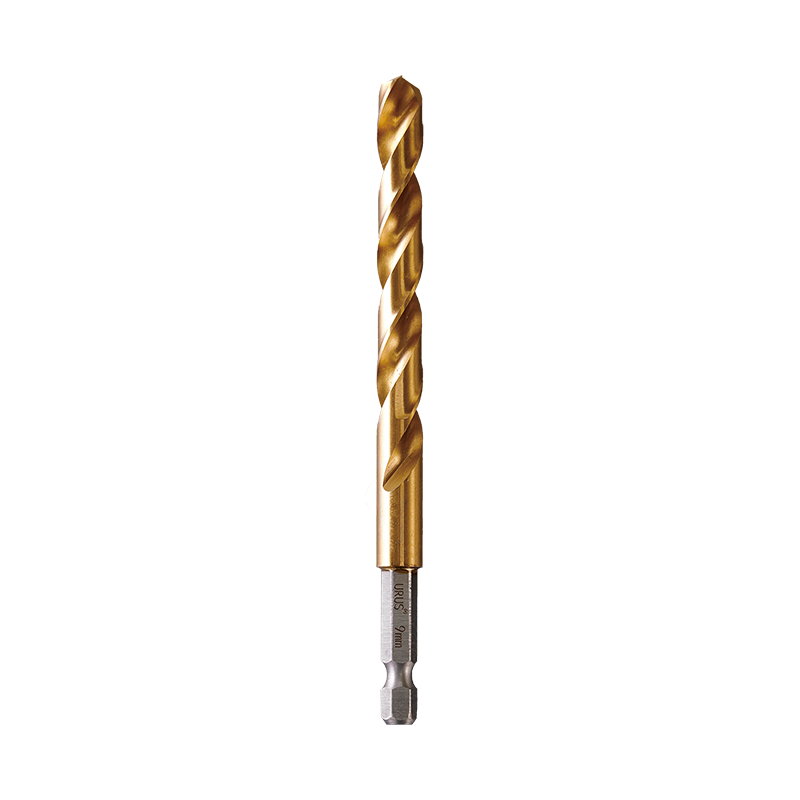 Split Point Metal Drill Bit for Quick Shank ChucksA metal drill bit with split-point geometry and quick-shank compatibility, suited to controlled drilling in steel rather than impact driving.View Product →
SDS-plus and SDS-max are hammer tool shank standards, not impact driver accessories. They fit rotary hammers and nothing else, and they exist because concrete needs hammering rather than impact driving.
Concrete anchors are the clearest sizing trap in the category. A 1/4-inch hex impact driver will spin a masonry bit and feel like it is working, but the missing hammer mechanism means the carbide edge grinds instead of fracturing aggregate, and bit life drops sharply. The correct accessory is an SDS-plus hammer drill bit in a rotary hammer, sized to the anchor diameter plus roughly 2 mm of clearance for the plug.
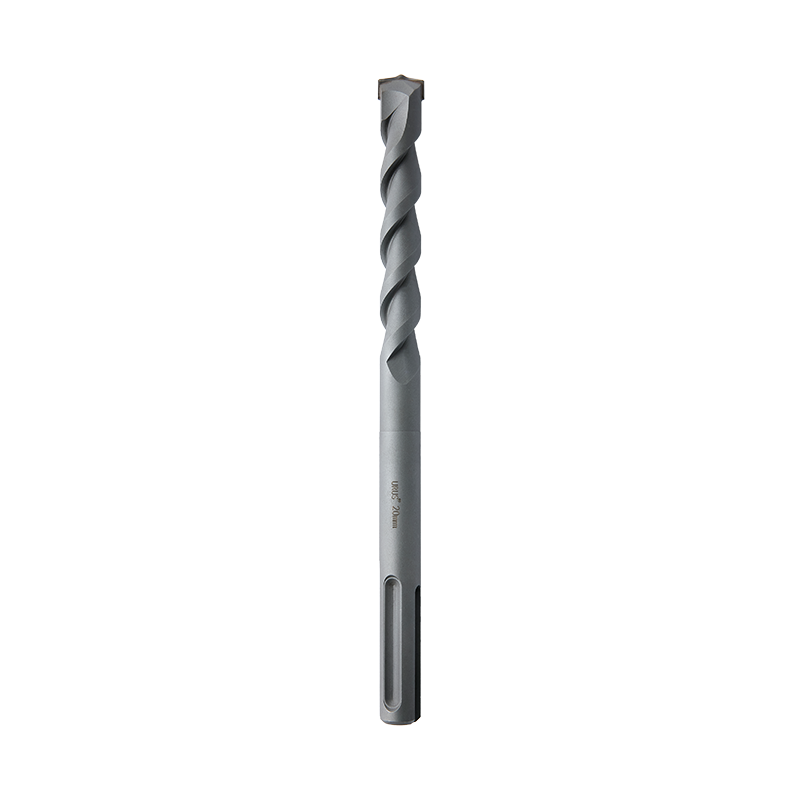 SDS Hammer Drill Bit for MasonryA masonry bit with carbide tip options and milled flutes, suited to drilling brick, concrete, and stone with rotary hammer.View Product →
Standardize on one battery platform and two torque classes: a compact driver at roughly 110 to 150 Nm for assembly and cabinet work, and a full-size driver at 170 to 260 Nm for structural screws and lag bolts. Mixing classes on one site is what produces stripped heads and dead batteries at the same time.
Then buy consumables by the thousand rather than the dozen. Driver bits are the highest-wear item in any kit, and on a production framing crew a single 1/4-inch hex bit can be retired within a few thousand fasteners. Impact-rated bits with torsion zones cost more per unit and considerably less per fastener driven, which is the only number that survives a budget review.
For buyers assembling a complete fastening package, the accessory side of the order carries most of the risk. Zhejiang URUS Tools Co., Ltd., the manufacturer behind the Bison hand tool range, produces drill bits, pliers and hand tool kits from a 36,000 square meter site in Jiashan, Zhejiang, with ISO 9001:2015 certification and a TUV Rheinland partner testing laboratory on site. The company exports to Japan, Europe and the United States, and holds OEM and ODM capability for private-label programs, which matters when the driver bits, drill bits and hand tools all have to arrive under one purchase order.
The honest summary: impact driver size is a torque decision wrapped around a fixed 1/4-inch hex interface. Pick the tool class your heaviest fastener needs with headroom to spare, match the bit or socket to the fastener head, and stop expecting a driver to do the work of a rotary hammer.
Yes for most jobs. A current 18-volt driver delivers roughly 1,500 to 2,300 in-lb (170 to 260 Nm) at the anvil, which covers 3/8-inch and 1/2-inch lag screws into softwood once a pilot hole is drilled. Hardwood, long lags and ledger screws are where a compact 12-volt driver stalls and a square-drive tool becomes the better choice.
Only with hex-shank bits and only in wood. The 1/4-inch quick-change chuck grips hex-shank accessories exclusively, and impact drivers are not built for the sustained side load of drilling. Hex-shank pilot bits are fine for short, shallow holes; anything deeper, or in metal and masonry, needs a drill or a rotary hammer.
None of the hex variety. Passenger car lug nuts are torqued to roughly 80 to 150 Nm, which sits comfortably inside the range of a 3/8-inch square-drive impact wrench and well inside a 1/2-inch mid-torque wrench. A hex driver with a socket adapter will often remove a lug nut that has already been broken loose, but it is the wrong tool for tightening to specification.
No. The 20-volt maximum label describes peak battery voltage under no load, while the nominal pack is still 18 volts. Torque class is determined by the motor, gearbox and impact mechanism, so compare published in-lb or Nm ratings rather than the voltage printed on the housing.
I. Introduction: Solving the "Impossible" Task The phrase "fitting a square peg into a round hole" is a universal symbol...
READ MOREMetalworking has always been a cornerstone of industrial development, shaping everything from automotive components to a...
READ MORE1. What Are Waterpump Pliers? – The Flexible “All-Rounder” Tool In modern industrial manufacturing and daily maintenance...
READ MORESelecting the appropriate industrial cutting tools is a critical decision that directly impacts manufacturing efficiency...
READ MORE
+86-573-84611229

+86-573-84611518


NO.35 Yucao Road, Ganyao Town, Jiashan City, Zhejiang Province, China
