

 中文简体
中文简体 English
 русский
 Inquiry
Don't hesitate to send a message
I. Introduction: Solving the "Impossible" Task The phrase "fitting a square peg into a round hole" is a universal symbol...
READ MOREDuring a recent batch inspection at a fastener assembly shop in Guangdong, the quality team rejected 320 out of 400 returned straight shank masonry drill bits. The bits were not defective at the factory gate. They were mismatched at the workbench. Every bit had a round plain shank, but operators had been using them in SDS-plus hammer drills without disabling the hammer mode. The shanks wobbled in the chuck, the carbide tips spalled, and the bits snapped at the shank flash line. Straight shank drill bit use has clear boundaries, and most field failures come from crossing them. This guide explains those boundaries in practical terms: which materials suit straight shank bits, which point geometries work best, and how speed, feed, and lubrication keep them cutting cleanly.
Content
A straight shank drill bit has a plain cylindrical shank whose diameter matches the bit body, and it transmits torque through surface friction between the shank and the chuck jaws.
This design is intentionally simple. Unlike SDS or hex shank systems that use mechanical locking profiles, the straight shank depends entirely on clamping force. The operator installs the bit into a standard chuck, tightens the jaws, and the friction between the steel shank and the chuck carries the rotation.
That simplicity delivers real advantages in workshop and production settings. A single chuck can accept a wide range of diameters without changing collets or adapters. Cost per bit stays lower because the shank is machined directly from the tool body. Replacement is instant when a bit wears out, and inventory management is simpler when a plant standardizes on round shank tooling. The basics of drilling operations and bit torque transfer are covered in our basic concepts of drilling guide.
The limitation is also clear. If the chuck cannot deliver sufficient clamping force, the shank will spin inside the jaws before the cutting edge does meaningful work. In hammer drilling applications, the shank has no hammer mechanism, so it cannot transfer impact energy efficiently. Straight shank drill bit use therefore requires matching the shank to the chuck type and the torque demand, not just to the material being drilled.
Straight shank drill bits are most effective in metal and wood drilling, while their masonry application is limited to non-percussion rotary drilling in soft brick or masonry blocks.
The material drives the selection more than the shank does. In wood, a straight shank bit with a brad point centers cleanly and cuts splinter-free holes for dowels, hinges, and hardware installation. The shank handles the torque easily because wood is the easiest drilling material. In metal, the same shank carries the load through split point or pilot point geometries, and the main risks become heat build-up and drill walking.
| Material | Point Type | Operating Mode | Typical Application |
| Wood | Brad point / pilot point | Rotary only | Furniture making, dowel holes, hardware mounting |
| Low-carbon steel | Split point | Rotary only | Assembly holes, jig drilling, metal fabrication |
| Aluminum | Pilot point / split point | Rotary with coolant | Machining, thin sheet work, profile drilling |
| Soft masonry | Carbide-tipped masonry point | Rotary only | Anchor holes, shallow through-holes in brick |
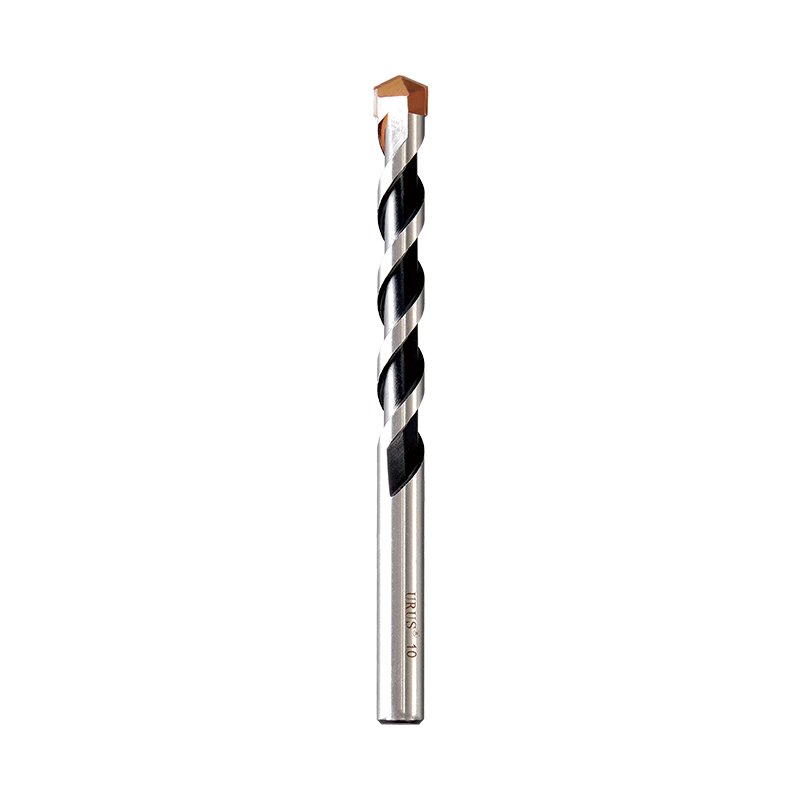 Round Shank Masonry Drill Bit for Rotary Drilling in Brick and BlockThis carbide-tipped bit with a reinforced flute and plain shank cuts clean holes in soft brick, mortar, and lightweight block when used in rotary mode only. It meets DIN8039 and ISO 5468 standards, with a hardened chrome-vanadium steel body and available tip options.View Product →
In masonry, the straight shank works only in rotary mode. When the material is soft brick, mortar line, or lightweight block, a round shank masonry bit with carbide tip will cut a clean hole without impact. Our round shank masonry drill bit is designed exactly for this duty: carbide tip, reinforced flute, and a plain shank that grips in a standard chuck. Do not attempt to use it in a hammer drill with the impact mechanism engaged.
In metal drilling, the shank is not the limiting factor. The point geometry is. For a practical walkthrough of choosing round-shank metal drill bit sets, see our round-shank metal drill bit guide. The primary risk is not shank slip but heat generation, which can temper the cutting edge and cause rapid dulling.
The point geometry of a straight shank drill bit controls how it enters the material, cuts the chips, and resists walking.
Every straight shank bit has the same shank, so the point geometry is what differentiates performance. A standard 118-degree point works for general purpose drilling but tends to walk on hard steel. A split point grinds the web thickness thinner, creating two small cutting lips that start the hole without walking, making it the safest choice for CNC and manual metal drilling.
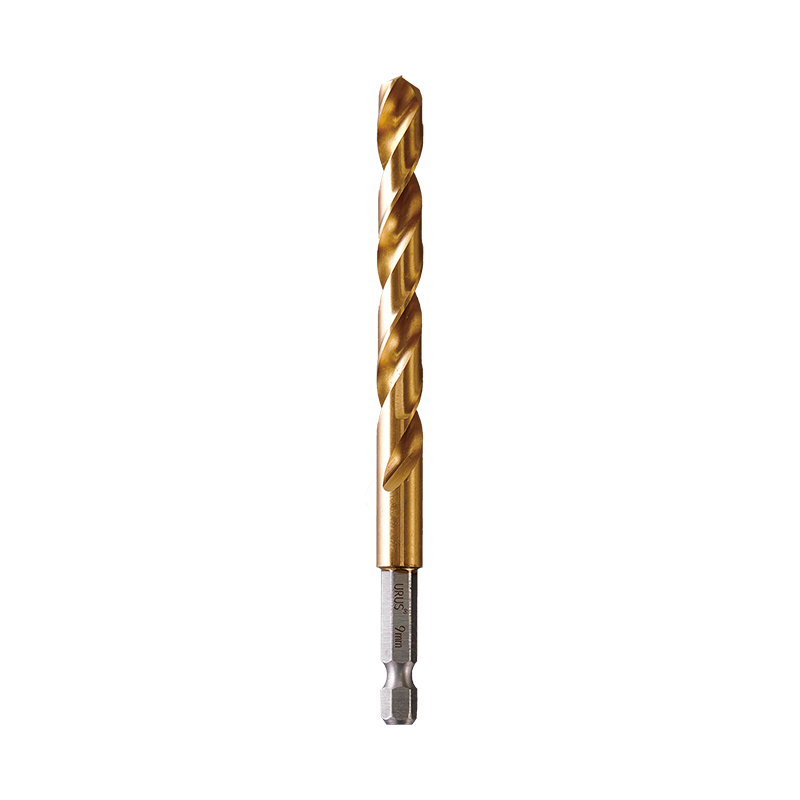 Split Point Drill Bit for Precise Hole Starting in MetalDesigned with a split point geometry that reduces web thickness, this bit starts holes without walking on hard steel. It fits 1/4-inch quick-change chucks and is suitable for both manual and CNC metal drilling, ensuring consistent position and roundness.View Product →
Our split point metal drill bits are engineered around this geometry for consistent hole position and roundness.
A pilot point adds a short self-centering tip that extends beyond the cutting lips. It pulls the bit into the material and is especially useful in thin sheet metal and aluminum, where breakthrough burrs and drill walking cause most rejects. For soft metal work, a pilot point bit is easier to control and leaves a cleaner hole entrance.
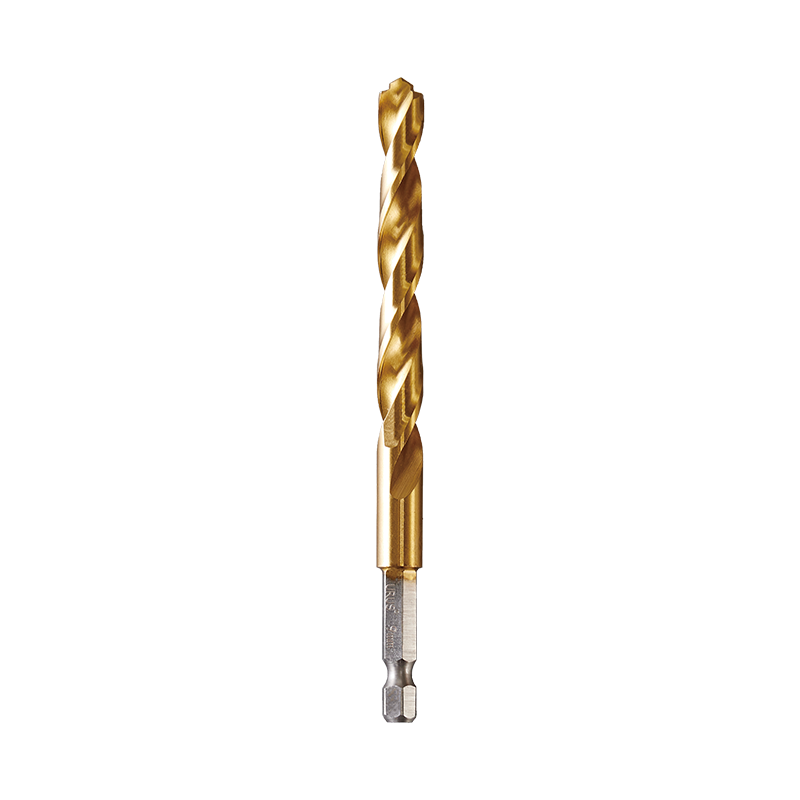 Pilot Point Drill Bit for Clean Holes in Thin MetalFeaturing a self-centering pilot tip that extends beyond the cutting lips, this bit pulls itself into material for controlled drilling in thin sheet metal and aluminum. It minimizes breakthrough burrs and walking, leaving a clean hole entrance.View Product →
Our pilot point drill bits handle that task while maintaining sharp edge geometry over longer runs.
A turbomax point, widely used on the production floor, focuses on chip discharge. It is a specialized geometry that suits high-speed CNC drilling in mild steel and aluminum, where chip packing in the flutes is the chief failure mode.
A straight shank drill bit is a drilling tool whose shank diameter matches the bit body and which relies on chuck friction for torque transfer. It is the most common drill bit format for rotary drilling in metal, wood, and soft masonry, but it is not designed for hammer impact loading.
A straight shank drill bit fails when you run it too fast, push it too hard, or leave it dry.
These three variables interact. Speed determines heat; feed determines chip load; lubrication removes heat and keeps the cutting edge sharp. If one lever is out of range, the bit can either overheat the work material or stall in the hole and snap.
In steel, a feed rate that is too light will cause the cutting edge to rub instead of cut, generating heat and producing work hardening on the hole wall. Too heavy a feed will chip the cutting lips or break the bit at the point. As a rule, increase feed when the chip is thin and stringy, and reduce feed when the bit starts to chatter.
Lubrication is non-negotiable. For low-carbon steel, a soluble oil coolant prevents the tip from reaching tempering temperatures. For aluminum, a light cutting oil or even kerosene reduces chip welding on the rake face. For wood, no coolant is needed, but the dust extraction matters as much as speed control.
Most straight shank drill bit failures are preventable, and the prevention has more to do with selection and handling than with the bit itself.
A straight shank drill bit is primarily used for rotary drilling in metal, wood, and soft masonry. It fits into a standard chuck and transmits torque through friction, making it the most versatile and cost-effective drill bit format for general workshop and production drilling.
No. SDS hammer drills use a mechanical locking shank system designed for impact energy transfer. A straight shank bit will wobble in the SDS chuck, slip, and likely break close to the shank. Use SDS shank bits for hammer drilling and straight shank bits only with rotary mode.
Slippage occurs when the chuck jaws cannot generate enough clamping force. Worn jaws, smooth shank surfaces, or overtightening on a soft shank all reduce the friction grip. Clean the shank, check jaw health, and always tighten the chuck properly before drilling.
Only for very light rotary drilling in soft masonry or when a specialized round shank masonry bit with carbide tip is used. For standard concrete and heavy percussion work, use SDS shank bits. Straight shank bits are not engineered for hammer impact loads and will fail quickly in that service.
I. Introduction: Solving the "Impossible" Task The phrase "fitting a square peg into a round hole" is a universal symbol...
READ MOREMetalworking has always been a cornerstone of industrial development, shaping everything from automotive components to a...
READ MORE1. What Are Waterpump Pliers? – The Flexible “All-Rounder” Tool In modern industrial manufacturing and daily maintenance...
READ MORESelecting the appropriate industrial cutting tools is a critical decision that directly impacts manufacturing efficiency...
READ MORE
+86-573-84611229

+86-573-84611518


NO.35 Yucao Road, Ganyao Town, Jiashan City, Zhejiang Province, China
