

 中文简体
中文简体 English
 русский
 Inquiry
Don't hesitate to send a message
I. Introduction: Solving the "Impossible" Task The phrase "fitting a square peg into a round hole" is a universal symbol...
READ MOREContent
Tungsten carbide is a sintered composite of tungsten and carbon with a cobalt binder, reaching roughly 1,600 HV hardness - more than twice the hardness of a premium high-speed steel bit.
The term carbide in drill bits almost always refers to tungsten carbide (WC), not the silicon carbide used in cut-off wheels. Manufacturers press fine tungsten carbide powder and cobalt binder into a tip shape, then sinter it at 1,400 to 1,600 degrees Celsius. The cobalt holds the hard grains together, creating a material that outlasts steel when drilling into concrete with aggregate stone.
The practical difference is heat. Carbide holds its hardness when the work area approaches 1,000 degrees Celsius, while high-speed steel softens beyond 600 degrees Celsius. When a masonry bit strikes aggregate stone right at the concrete surface, the tip can reach these temperatures in the first second of drilling. A carbide tip keeps cutting; a high-speed steel bit rounds over.
Tungsten carbide is a metal matrix composite made by sintering tungsten carbide powder with a cobalt binder. It is neither pure tungsten nor steel, and its hardness and heat resistance make it the standard for masonry and concrete drilling.
Under a 10x loupe, a genuine carbide tip shows a fine crystalline grain texture, while a steel tip looks polished or carries continuous machining lines.
The visual differences are subtle but learnable, and they help sort a crate of bits before any destructive test. Carbide is matte gray with a slight bronze cast depending on cobalt content - it is never mirror-bright silver. A sintered carbide tip looks like sandpaper under magnification, dense with interlocked grains, while high-speed steel shows grinding lines or a smooth polish. On carbide-tipped bits, a thin copper or silver brazing line separates the tip from the shank. Masonry carbide tips are also usually triangular or arrowhead-shaped and slightly wider than the flutes, which is a design requirement for breaking rock rather than just drilling.
Red flags in visual inspection: a mirror-bright tip, continuous striations across the tip surface, no visible brazing line, or rust-colored spots on the tip itself. Carbide does not rust; the steel shank can.
For a real-world reference, the SDS 3-cutter carbide-tipped hammer bit from Zhejiang URUS Tools Co., Ltd. shows the three-blade carbide geometry described above.
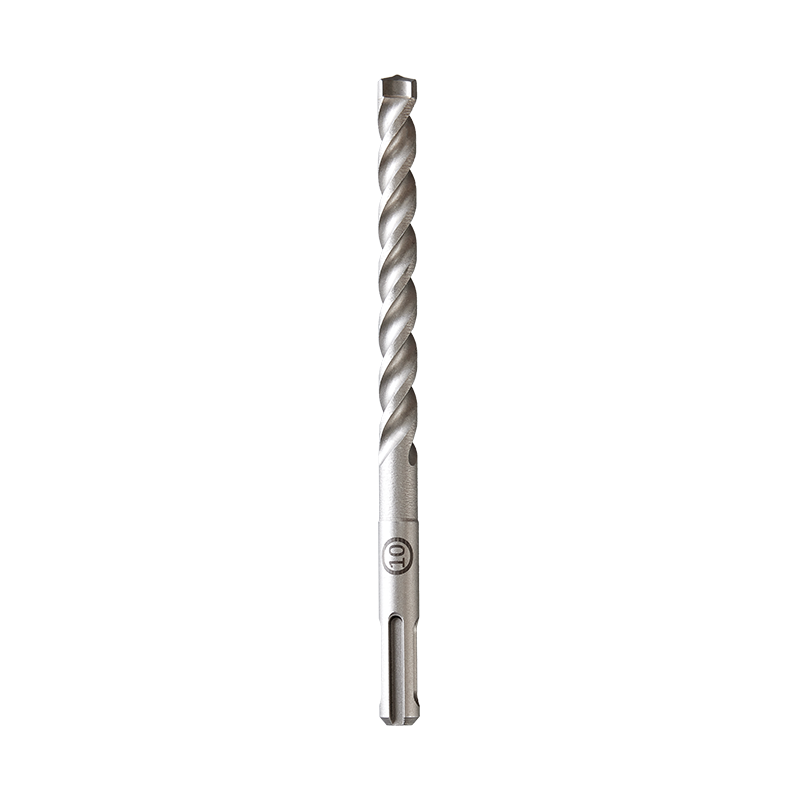 SDS-3-Cutter Carbide-Tipped Hammer Bit for Concrete and StoneThis bit features a three-blade carbide geometry that balances speed and durability, with an optimized flute design for efficient dust removal. Ideal for drilling in brick, concrete, and stone, it offers reliable performance in demanding masonry work.View Product →
A magnet sticks to the steel body of almost every drill bit, but it should not stick firmly to a genuine carbide tip, and a spark test confirms the result in less than three seconds.
Magnet test. Test the shank and the tip separately. Strong magnetism at the tip means the bit is not carbide-tipped. Weak or no magnetism at the tip while the shank attracts means the bit is likely carbide-tipped. High-cobalt carbide grades can show a faint magnetic response, so this test is indicative but not conclusive on its own.
Spark test. Lightly grind the tip against a bench grinder wheel and count the sparks. This takes seconds and gives a clear material signature.
| Property | Tungsten Carbide | High-Speed Steel | Carbon Steel |
| Hardness (HV) | 1,300-1,700 | 700-800 | 550-650 |
| Density (g/cm3) | 15.6 | 8.2 | 7.8 |
| Magnetic tip response | No or weak | Strong | Strong |
| Spark intensity | Minimal | Moderate, red-orange | Large, yellow |
| Max working temp (Celsius) | 1,000 | 600 | 400 |
Tungsten carbide has a density of about 15.6 grams per cubic centimeter, nearly double the 8.2 of high-speed steel, so a carbide drill bit feels noticeably bottom-heavy compared with a steel bit of the same diameter.
Hold two bits of equal diameter and length in opposite hands. The carbide-tipped one feels distinctly denser, with the weight concentrated in the tip. For a quantitative check, use a pocket scale: weigh a 10mm SDS drill bit from the supplier and compare it with a known HSS bit of the same dimensions. Expect a 20 to 40 percent weight difference depending on tip size and shank design.
When you receive 500 carbide bits and cannot test every one, a density sample of 10 pieces can reveal a systematic material substitution. A 2-3 percent weight deviation from the reference sample is already a signal to inspect further.
Professional carbide drill bits carry a TCT (Tungsten Carbide Tipped) marking, a K10/K20/K30 ISO application grade, or a YG code on the shank, and ISO 9001 factories normally print a manufacturing reference on the packaging.
Markings are not a full guarantee, but their absence is a strong negative signal. The evolution of carbide masonry bit design has progressed well beyond simple tips, and the coating and geometry advancements described in our guide to the next evolution in masonry drill bits add more reason to identify the exact material before placing a large order.
On the packaging, look for the manufacturer name or logo printed on the backing card. A bit with no grade code and no manufacturer marking is more likely to be a re-labeled piece from a third-party reseller than a certified component from a factory that can show ISO 9001:2015 certification.
Before approving a new carbide drill bit supplier, run this five-step verification on samples from the actual shipment: visual inspection, magnet test on the tip, spark test, density check, and certification audit.
When evaluating a supplier's range, ask whether they have in-house brazing and grinding equipment. A poorly brazed carbide tip fails differently from a fake carbide tip made from hardened steel. For multi-material drilling, a product like the multimaterial drill bit from URUS Tools is a concrete example of a design that relies on its carbide composition to cut through brick, concrete, tile, and wood with a single bit.
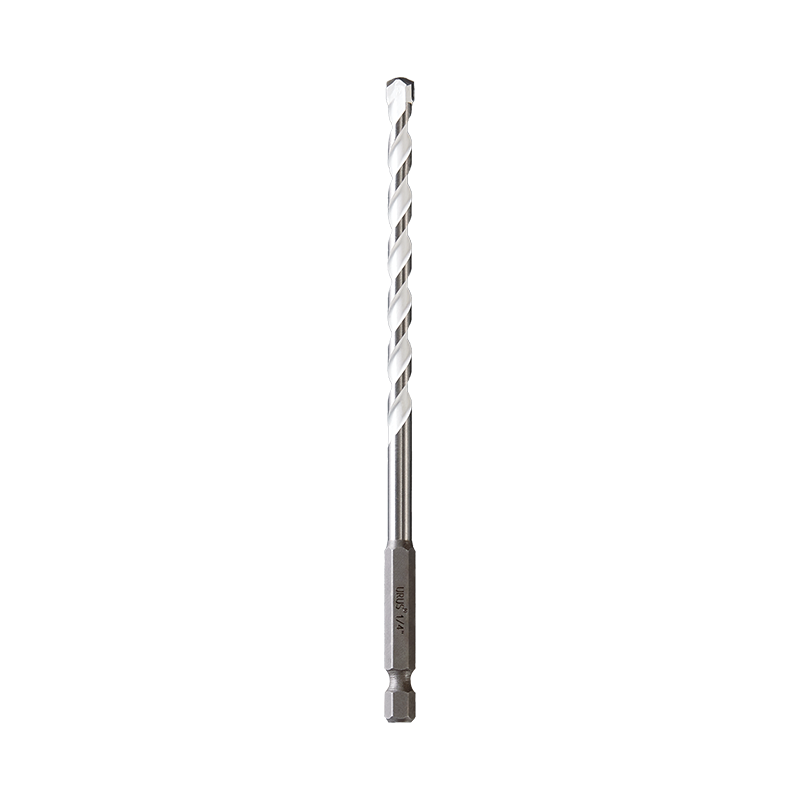 Multi-Material Drill Bit with Carbide Head for Versatile DrillingDesigned with a robust carbide head and hex shank, this bit drills through masonry, wood, plastic, and tile without switching tools. Its sharp ground edges and steep flutes ensure fast, clean cuts, making it a practical choice for mixed-material jobs.View Product →
A genuine tungsten carbide tip is not ferromagnetic and will not attract a magnet firmly, but the steel body of the bit will. If a magnet sticks strongly to the tip area, the bit is not carbide-tipped.
In masonry and concrete, a carbide-tipped bit can last 10 to 20 times longer than an HSS bit before needing replacement. In metal drilling, the difference is smaller, and HSS may be the better economic choice because it is less brittle.
Perform three checks: look for a brazing line between the tip and shank, test the tip with a magnet, and grind the tip against a bench grinder to observe the spark signature. Minimal sparks indicate tungsten carbide.
Solid carbide is harder and stiffer but more brittle and expensive. Carbide-tipped bits put carbide only at the cutting edge, which reduces cost while keeping the tool usable for hammer drilling. For masonry work, carbide-tipped is the practical standard.
I. Introduction: Solving the "Impossible" Task The phrase "fitting a square peg into a round hole" is a universal symbol...
READ MOREMetalworking has always been a cornerstone of industrial development, shaping everything from automotive components to a...
READ MORE1. What Are Waterpump Pliers? – The Flexible “All-Rounder” Tool In modern industrial manufacturing and daily maintenance...
READ MORESelecting the appropriate industrial cutting tools is a critical decision that directly impacts manufacturing efficiency...
READ MORE
+86-573-84611229

+86-573-84611518


NO.35 Yucao Road, Ganyao Town, Jiashan City, Zhejiang Province, China
