

 中文简体
中文简体 English
 русский
 Inquiry
Don't hesitate to send a message
I. Introduction: Solving the "Impossible" Task The phrase "fitting a square peg into a round hole" is a universal symbol...
READ MOREA site manager on a high-rise concrete pour opens a damaged pallet of masonry bits and finds round-shank drills next to an SDS-Plus rotary hammer. Every bit spins in the chuck without impact, and the whole shift is lost. This happens when the most basic physical specification of a drill bit is overlooked: the shank type. The shank is the non-cutting end that fits into the tool holder. It defines how torque and impact force are delivered to the cutting edge, and it determines whether a bit runs at full capacity or fails immediately.
Content
The drill shank is the non-cutting end of the bit that fits into the chuck or tool holder. It is the mechanical interface that carries the entire torque and impact load from the drill to the cutter. A shank that does not match the tool holder will slip, spin, or fail under load.
The hidden work of the shank is visible when you compare these numbers with what happens on site. The shank controls the amount of rotational force that reaches the cutting edges. It also determines whether a rotary hammer can transfer hammer blows into the bit. That is why a round shank bit in an SDS hammer does nothing except spin.
The shank carries the full torque and impact load. A 0.1mm diameter mismatch can reduce gripping force by more than 30 percent.
| Shank type | Standard | Typical application | Tool match |
| Round shank | DIN 338 | Metal, wood, light drilling | Keyed or keyless chuck |
| Hex shank | DIN 3126 | Wood, metal, screwdriving | Quick-change, auto-lock chucks |
| SDS-Plus | ISO 7435 | Concrete, masonry | SDS-Plus rotary hammers |
| SDS-Max | ISO 7435 | Heavy concrete, core drilling | SDS-Max rotary hammers |
Every drill shank type exists for one reason: to deliver torque under specific drilling conditions. When procurement teams understand the four standard families, they stop wasting money on bits that cannot be used at all.
The round shank is the generic workhorse. It is made to the DIN 338 standard with a diameter tolerance of h7, and it relies on the chuck's friction grip to hold the bit. It is perfect for metal drilling, wood, and light masonry in portable drills and drill presses. The tradeoff is low torque capacity and no impact transfer.
The hex shank has six flat faces that engage positively with a hex chuck or quick-change driver. The 1/4 inch size is common in multi-bit kits. It gives more torque than a round shank and is easy to swap between bits, but it cannot take heavy hammer blows.
The SDS-Plus shank follows ISO 7435. It has two open slots and two closed grooves that lock into the hammer with a bayonet action. This allows the bit to slide forward and back while rotating, which transfers impact energy without deformation. It suits concrete and masonry holes from 12mm to 26mm.
The SDS-Max shank is a larger version of the same system, with a shank diameter around 18mm. It is designed for heavy rotary hammers and drilling holes above 26mm in concrete and rock. The larger cross-section absorbs the shock loads of high-performance hammers.
The visible difference between shank types is not cosmetic. Round shanks are friction-based, SDS shanks are lock-based. A buyer should never decide a shank type by looking at a photo or the bit color. Measure the shank, read the standard, and match it to the tool holder.
The matching rule is simple: check your tool holder first, then the material, then the hole diameter. If you follow this order, you will never order a useless bit again.
The chart below plots the relative torque capacity of the four shank families. The data comes from tool holder performance comparisons used in our own machining tests at Zhejiang URUS Tools Co., Ltd.
This is why a procurement manager needs to ask one question before buying a hundred SDS-Plus bits: does the drill have an SDS-Plus holding mechanism? Understanding how force is transmitted is also covered in these drilling basics, which explain the tool side of the equation.
Best for metal, wood, and shallow masonry with no hammer function. Low torque, no impact, easy to change by hand. Works with any standard drill press or handheld drill.
Best for concrete, brick, and block. High torque, full impact transfer, necessary for hammering anchors and rebar cutting. Cannot be installed in a keyless chuck.
At Zhejiang URUS Tools Co., Ltd. in Jiashan, we run a fixed incoming check on every shank sample. The five acceptance points are shank diameter, hardness, surface condition, shank geometry, and packaging identification.
The first and most common failure is a shank that is slightly smaller than the standard. A round shank with a diameter tolerance of h7 should measure within a few hundredths of a millimeter. Use a micrometer to verify the axis. Our 65,000 square meter facility in Jiashan has the equipment to measure these tolerances in-house.
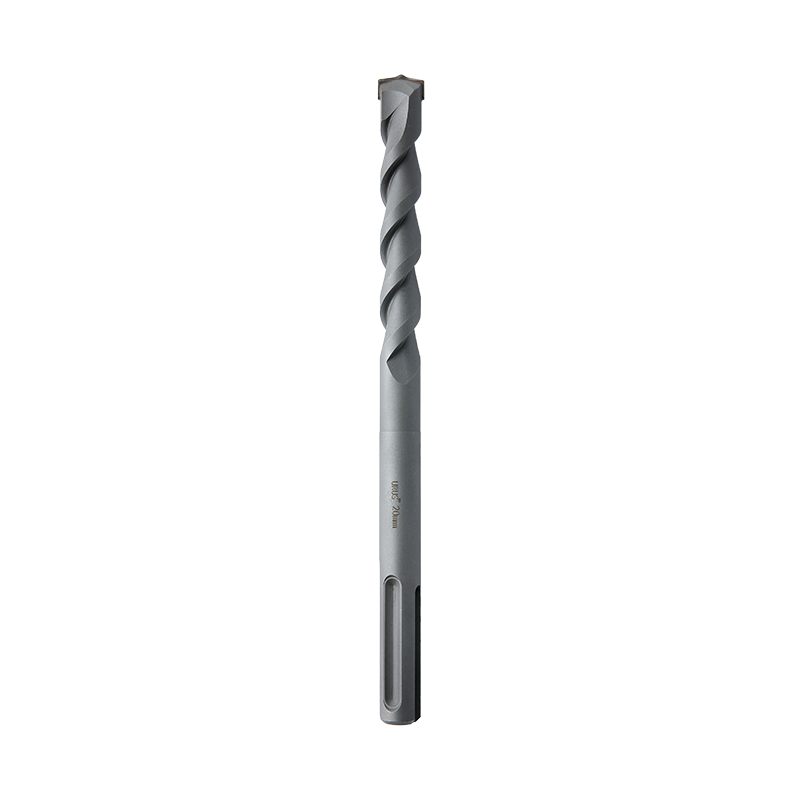 SDS-Plus Hammer Drill Bit for Concrete and Stone DrillingThis SDS hammer drill bit features an SDS-Plus shank, ideal for 12-26mm concrete anchors, and is available with milled flute options for efficient drilling in brick, concrete, and stone.View Product →
For concrete drilling, the SDS-Plus shank is the first family to verify. If your crew uses 12mm to 26mm concrete anchors, an SDS-Hammer Drill Bit with an SDS-Plus shank is the safest starting point.
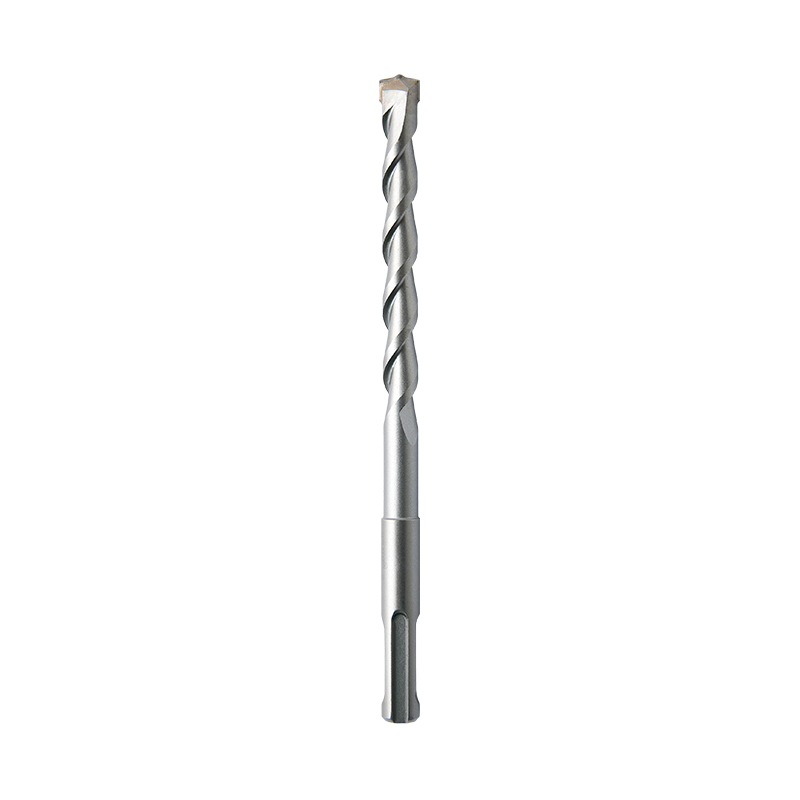 SDS-Max Hammer Drill Bit for Heavy Rotary Hammer ApplicationsDesigned for large holes in concrete and masonry, this SDS-Max drill bit has an optimized flute for efficient power transfer, suitable for high-performance rotary hammers.View Product →
When the job moves to heavy rotary hammers and large holes, upgrade to an SDS-Max shank. The larger shank cross-section tolerates the shock waves of high-performance hammers without deformation.
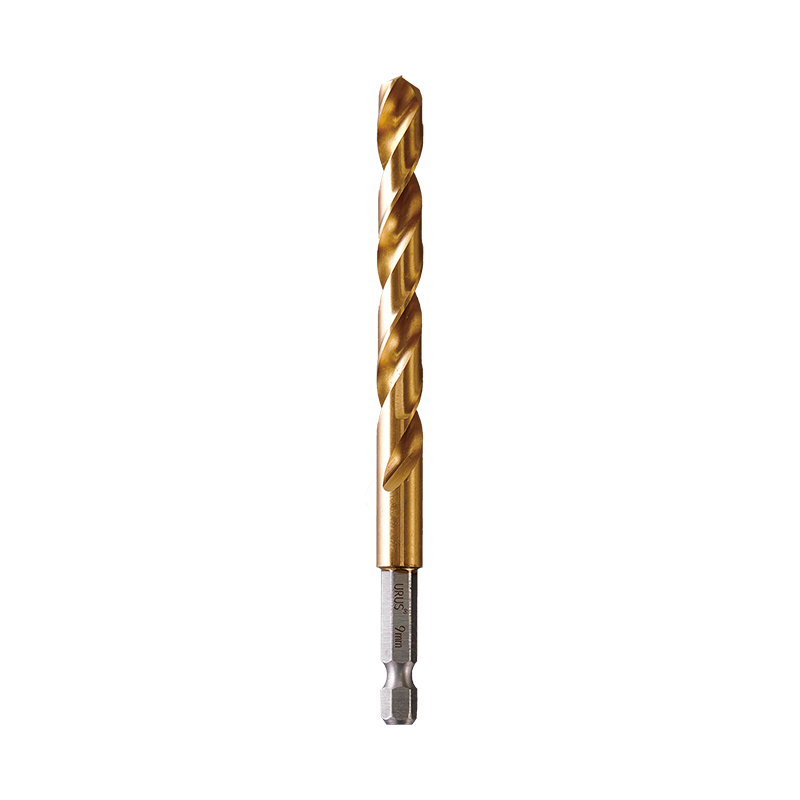 Split Point Drill Bit with Self-Centering Tip for MetalThe split point tip self-centers to reduce walking, making it a reliable choice for portable drills when drilling metal, ensuring accurate hole placement.View Product →
For metal drilling in portable drills, a split point shank is the reliable choice. The split point self-centers and reduces walking, which is especially important in manual drilling where a sloppy start ruins the hole.
Three mismatch patterns cause most drill failures on construction sites: using a round shank in an SDS tool, forcing an SDS-Max shank into an SDS-Plus chuck, and running an undersized hex shank under high torque.
| Tool type | Round | Hex | SDS-Plus | SDS-Max |
| Keyless chuck drill | Yes | Adapter only | No | No |
| Quick-change driver | Adapter only | Yes | No | No |
| SDS-Plus rotary hammer | No | No | Yes | No |
| SDS-Max rotary hammer | No | No | No | Yes |
Prevention is cheaper than replacement. The time spent measuring the shank on one bit saves the cost of an entire pallet of mismatched parts.
The round shank is the most common because it fits the widest range of portable drills and drill presses. In construction and industrial catalogs, SDS-Plus is the second most ordered shank family.
No. SDS tools require a shank with slots and grooves that engage the hammer lock. A round shank will rotate freely inside the holder and the impact mechanism will not function.
SDS-Plus has a 10mm shank and handles concrete holes from 12mm to 26mm. SDS-Max has a much larger shank of around 18mm and is used for heavy hammers and holes above 26mm.
For rotary hammer drilling, order SDS-Plus for standard concrete anchors and SDS-Max for heavy core work. Round shank masonry bits only fit in hammer-action drills that use a keyed chuck.
I. Introduction: Solving the "Impossible" Task The phrase "fitting a square peg into a round hole" is a universal symbol...
READ MOREMetalworking has always been a cornerstone of industrial development, shaping everything from automotive components to a...
READ MORE1. What Are Waterpump Pliers? – The Flexible “All-Rounder” Tool In modern industrial manufacturing and daily maintenance...
READ MORESelecting the appropriate industrial cutting tools is a critical decision that directly impacts manufacturing efficiency...
READ MORE
+86-573-84611229

+86-573-84611518


NO.35 Yucao Road, Ganyao Town, Jiashan City, Zhejiang Province, China
