

 中文简体
中文简体 English
 русский
 Inquiry
Don't hesitate to send a message
I. Introduction: Solving the "Impossible" Task The phrase "fitting a square peg into a round hole" is a universal symbol...
READ MOREContent
A drilling bit is a cutting tool used with a drill to remove material and create cylindrical holes in a workpiece. It is one of the most fundamental tools in machining, construction, and fabrication. Drill bits are designed to rotate at high speed while applying axial force, allowing the cutting edges to shear or abrade material away progressively with each revolution.
The basic anatomy of a drill bit includes the point (the tip that initiates the cut), the flutes (helical grooves that evacuate chips and deliver coolant), the shank (the portion held by the chuck), and the body (the main working length). Variations in each of these features define a bit's performance across different materials and applications.
Drill bits are manufactured from a wide range of materials — including high-speed steel (HSS), cobalt alloys, and tungsten carbide — and may be coated with titanium nitride (TiN), black oxide, or diamond-like carbon (DLC) to extend tool life and reduce friction. The global cutting tools market, which includes drill bits, was valued at over USD 9 billion in 2023 and continues to grow alongside demand in aerospace, automotive, and construction sectors.
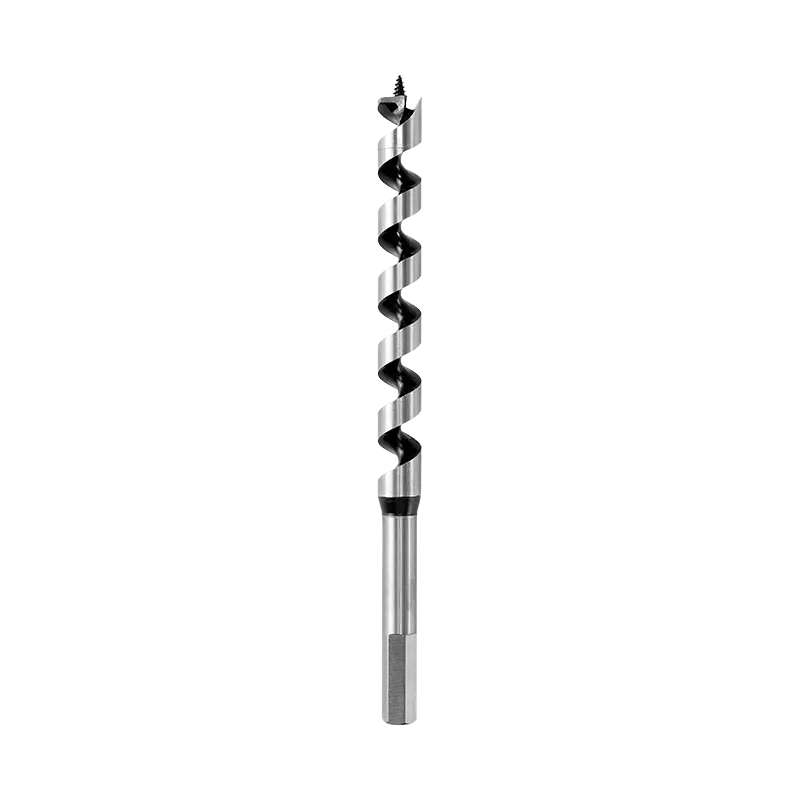
A cup drill bit — also known as a Forstner bit or flat-bottomed boring bit — is a specialized woodworking tool designed to cut clean, flat-bottomed holes with smooth sidewalls. Unlike standard twist bits that leave a conical recess at the base, cup drill bits produce a cylindrical cavity ideal for concealed hinges, dowel pockets, and recessed hardware installations.
The key structural difference is the rim-guided cutting design: the outer circular rim does the primary cutting and defines the hole diameter, while a small center spur scores the wood grain to prevent tear-out. This makes cup bits particularly effective on cross-grain cuts where ordinary bits tend to wander or splinter the surface.
Cup bits are available in diameters from 10 mm up to 150 mm and are typically used with a drill press for precision depth control, though they can be used with a handheld drill when guided by a jig. They are not suited for metal or masonry — use is largely limited to solid wood, plywood, and MDF.
Carbide drill bits — made from tungsten carbide (WC) bonded with cobalt — are engineered for applications where standard HSS bits fail or wear too rapidly. With a Vickers hardness rating above 1,500 HV (compared to roughly 800–900 HV for HSS), carbide maintains its cutting edge at temperatures exceeding 900°C, making it the preferred choice for high-speed CNC machining, abrasive materials, and hard workpieces.
Solid carbide bits are typically used in machining centers rather than handheld drills, because their hardness also makes them brittle under lateral shock or vibration. Carbide-tipped bits — which combine a steel body with a brazed carbide tip — offer greater shock resistance and are more common in construction and general workshop environments.
| Material | Carbide Bit Type | Key Advantage |
|---|---|---|
| Hardened steel / stainless | Solid carbide twist bit | Heat resistance, edge retention |
| Cast iron / alloy steels | Carbide-tipped bit | Abrasion resistance |
| Concrete / masonry | Carbide SDS / hammer bit | Impact durability |
| Fiberglass / CFRP composites | Solid carbide brad-point or straight-flute | Minimizes delamination |
| Ceramic / glass tiles | Carbide spear-point bit | Crack-free entry |
In CNC production environments, solid carbide drill bits extend tool life by 3–10× compared to HSS when drilling hardened steels above 40 HRC, which directly reduces downtime and per-hole tooling cost. For construction trades, carbide-tipped SDS-plus and SDS-max bits remain the standard for rotary hammer drilling in reinforced concrete — the bit's geometry combines percussion impact with rotary cutting to penetrate aggregate efficiently.
Selecting the correct drill bit comes down to four variables: workpiece material, required hole geometry, machine type, and production volume. Using the wrong bit not only shortens tool life — it risks workpiece damage, dimensional error, and safety hazards from bit breakage under load.
Beyond material, always consider the depth-to-diameter ratio: holes deeper than 5× the diameter require parabolic-flute or deep-hole bits with intermittent retraction cycles to clear chips and prevent heat buildup. For production drilling where hundreds of identical holes are needed, investing in coated carbide bits with precise point geometry reduces cost-per-hole significantly over cheaper HSS alternatives.
I. Introduction: Solving the "Impossible" Task The phrase "fitting a square peg into a round hole" is a universal symbol...
READ MOREMetalworking has always been a cornerstone of industrial development, shaping everything from automotive components to a...
READ MORE1. What Are Waterpump Pliers? – The Flexible “All-Rounder” Tool In modern industrial manufacturing and daily maintenance...
READ MORESelecting the appropriate industrial cutting tools is a critical decision that directly impacts manufacturing efficiency...
READ MORE
+86-573-84611229

+86-573-84611518


NO.35 Yucao Road, Ganyao Town, Jiashan City, Zhejiang Province, China
