

 中文简体
中文简体 English
 русский
 Inquiry
Don't hesitate to send a message
I. Introduction: Solving the "Impossible" Task The phrase "fitting a square peg into a round hole" is a universal symbol...
READ MOREEvery toolbox needs a versatile hero, and for millions of DIYers and professionals alike, that hero is often the humble slip joint pliers. This unassuming tool is a master of adaptation, capable of tackling a surprising range of tasks from plumbing repairs to automotive work. Unlike fixed-joint pliers, their defining feature is a movable pivot point that allows the jaw to expand, granting the user the ability to grip objects of various sizes. This simple yet ingenious design makes them an indispensable first tool for beginners and a constantly-reached-for backup for seasoned experts. In this comprehensive guide, we’ll explore not just what they are, but how their proper use can significantly enhance the efficiency, safety, and quality of your DIY projects. We’ll delve into their mechanics, compare them to other pliers, and provide practical tips to unlock their full potential in your workshop or home repair kit.
Content
The genius of slip joint pliers lies in their elegantly simple adjustment mechanism. At the heart of the tool, the two halves are connected by a pivot bolt that rides in a curved, elongated slot (the "slip joint") rather than a fixed hole. When you need to grip a larger object, you manually spread the handles apart, which causes the pivot bolt to "slip" or slide to the wider end of this slot. This action increases the distance between the jaw's tips while bringing the gripping surfaces closer to the pivot, providing a wider grip range at the expense of some mechanical leverage. Conversely, for smaller objects, the pivot is moved to the narrower end of the slot, maximizing gripping force. This dual-position functionality effectively gives you two tools in one. The jaws themselves are typically a combination of serrated gripping areas for holding nuts or irregular shapes and a curved section, sometimes with a small wire cutter near the pivot. Understanding this operation is key to using them effectively, as selecting the correct jaw position for the task at hand ensures a secure grip and prevents damage to both the workpiece and the tool.
While slip joint pliers are incredibly versatile, they are not designed for every task. Knowing how they stack up against other specialized pliers will save you time and prevent tool damage. The primary advantage of slip joints is their adjustable capacity, making them a fantastic general-purpose tool for occasional gripping, twisting, or bending. However, for high-torque applications or precision work, other types excel. For instance, locking pliers (like Vise-Grips) provide a clamped, hands-free hold. Tongue-and-groove pliers (often called Channellocks) offer a wider, multi-position adjustment range ideal for plumbing. Needle-nose pliers provide access to tight spaces for electrical work. Using the wrong plier can round off a nut, mar a surface, or lead to injury. Therefore, a key skill for any DIYer is building a basic plier set and knowing which one to grab. The following table outlines the ideal use cases to help you decide when your trusty slip joints are the best choice and when you might need a more specialized tool.
| Tool Type | Key Feature | Best For | Where Slip Joints Compare |
| Slip Joint Pliers | Adjustable pivot in two main positions. | General gripping, bending wire, holding nuts/bolts of various sizes, light-duty tasks. | The versatile, go-to option for unpredictable sizes. |
| Locking Pliers (Vise-Grip) | Locks onto workpiece with tremendous force. | Clamping materials together, removing stripped bolts, holding items permanently. | Slip joints cannot lock; they require constant hand pressure. |
| Tongue-and-Groove Pliers | Slide adjustment with multiple jaw width settings. | Plumbing (pipes, fittings), large hexagonal nuts. | Slip joints have limited range; tongue-and-groove pliers are better for large, constant-diameter objects. |
| Needle-Nose Pliers | Long, tapered jaws for precision. | Electrical work, reaching into confined spaces, shaping wire. | Slip joint jaws are too short and stout for fine work in deep spaces. |
| Combination Pliers | Fixed joint with cutting and gripping zones. | Heavy-duty wire cutting, consistent gripping force. | Slip joints offer size flexibility that fixed combination pliers lack. |
Their adaptability makes slip joint pliers a workhorse for common household repairs and projects. For anyone wondering how to use slip joint pliers for household repairs, the answer lies in their ability to step in for more specialized tools in a pinch. They are the perfect companion for quick fixes where you don't want to dig through a full toolset. One of their most frequent uses is in basic plumbing, such as tightening or loosening small supply line nuts under a sink or holding a fixture steady while you work on it. In automotive maintenance, they're invaluable for changing sink fixtures with slip joint pliers, as they can grip the awkward, often soft metal nuts found on drain assemblies and faucet locknuts without causing excessive damage if used carefully. For crafters and hobbyists, they excel at bending and cutting wire for projects. In the garage, they can adjust bicycle brake cables or hold a bolt head while you tighten the nut on the other side. Their utility in DIY jewelry making with adjustable pliers is often overlooked; the smooth, curved part of the jaw can gently shape metal rings or components without leaving harsh tool marks, provided they are used with care on softer metals.
Proper care ensures your slip joint pliers remain a reliable partner for years. The adjustment mechanism is the tool's core, so keeping it clean and lightly lubricated is paramount. After use, especially in wet or dirty environments, wipe the pliers down with a dry cloth. Periodically, apply a single drop of light machine oil (like 3-in-1 oil) to the pivot joint and work it in by opening and closing the handles. This prevents rust and ensures smooth, easy adjustment—a key factor for best slip joint pliers for beginners who need a tool that operates without frustrating stiffness. Avoid using them as a hammer or prying tool, as this can bend the jaws or distort the pivot slot, ruining the adjustment. If the serrations in the jaw become clogged with material, clean them with a stiff brush or a pick. For maintenance tasks like maintaining slip joint pliers grip, check that the jaw teeth are not worn smooth; if they are, it’s time to replace the tool, as a slipping grip is dangerous. Store them in a dry place to prevent corrosion, which can seize the joint.
Safety is paramount with any hand tool, and slip joint pliers are no exception. While they seem straightforward, improper use can lead to pinched fingers, slipped grips causing hand injuries, or damage to the workpiece. A fundamental rule is to always select the correct jaw position. Forcing the pliers to grip an object too large for the current setting can strain the mechanism and cause the pivot to slip unexpectedly under pressure, potentially causing your hand to slam into another object. When applying significant force, especially for tasks like tightening hose clamps with slip joint pliers, ensure your grip is secure and your hand position is such that if the pliers slip, your knuckles won't hit anything sharp or hard. Always point the handles away from your body and face. Wear safety glasses to protect your eyes from any flying debris, particularly when cutting wire. Be mindful of your surroundings; using them in tight, confined spaces requires extra caution to avoid skin abrasions. Remember, these are gripping and bending tools, not substitutes for wrenches on hardened fasteners, as they can round off bolt heads and create a hazardous situation.
The primary advantage of slip joint pliers is their versatile, adjustable jaw capacity. Unlike fixed-joint pliers, they can accommodate two distinct size ranges by simply shifting the pivot point. This makes them an excellent general-purpose "do-it-all" tool for the toolbox, especially useful when you encounter nuts, bolts, pipes, or fittings of varying sizes and don't have the exact specialized wrench or plier at hand. This adaptability is why they are often recommended as a fundamental tool for any beginner's kit, providing more functionality in a single tool than many fixed alternatives.
Yes, you can use slip joint pliers for many basic plumbing tasks, which is a common application for changing sink fixtures with slip joint pliers. They are well-suited for tightening or loosening the slip nuts on sink drain pipes, compressing ferrule nuts on supply lines, and holding faucet locknuts. However, caution is needed. The serrated jaws can mar soft brass or chrome fittings. For a more professional finish and to avoid damage, it's often better to use smooth-jawed basin wrenches or adjustable wrenches for final tightening on visible fixtures. Use your slip joints for initial loosening of tight connections or in concealed areas where tool marks don't matter.
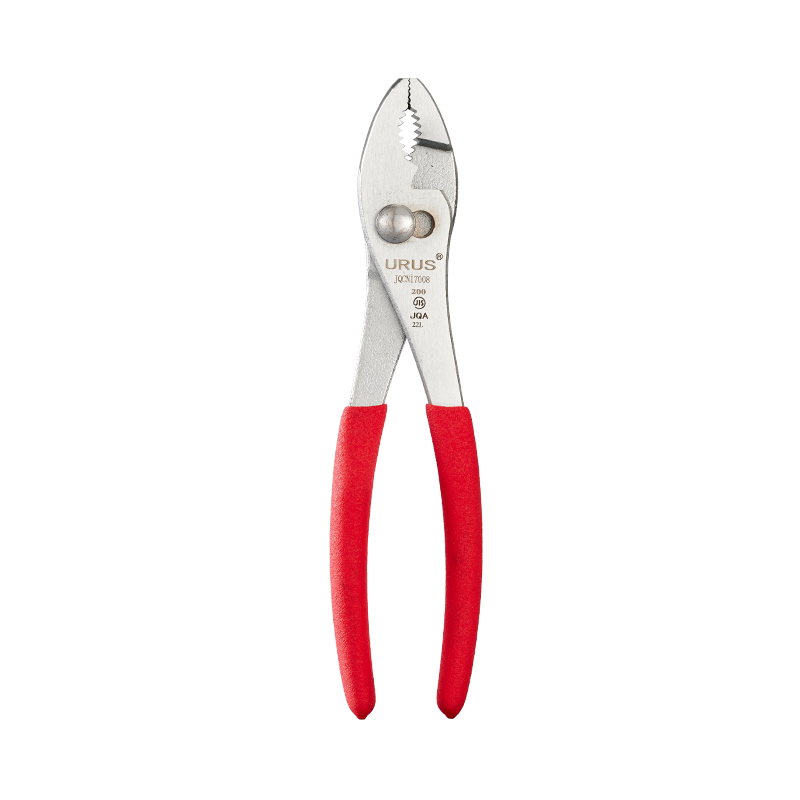
To prevent damage, first ensure you are using the correct jaw setting to maximize surface contact. Use the narrow setting for smaller fasteners to apply force more evenly. If possible, position the jaws on the flats of the nut or bolt, not the corners. For tasks where surface preservation is critical, such as in DIY jewelry making with adjustable pliers, you can cushion the jaws with a few layers of electrical tape or use dedicated nylon-jaw covers. Most importantly, know when to stop. Slip joint pliers are not precision torque tools. If a fastener is extremely tight or you need significant force, switch to a proper box-end or socket wrench designed to apply torque without slipping and rounding the edges.
When selecting the best slip joint pliers for beginners, focus on quality, comfort, and safety. Look for a robust construction with cleanly machined jaws that meet evenly. The adjustment should be firm yet smooth, without excessive wobble or looseness. Comfortable, ergonomically designed handles with a non-slip grip are essential for control and to reduce hand fatigue. Ensure the tool feels solid in your hand. A built-in wire cutter is a valuable added feature. While you don't need the most expensive model, avoiding the cheapest, poorly-made options is wise, as they may have loose joints, weak metal, or poor cutting edges that can fail or make tasks more difficult and less safe.
If your pliers are slipping, it usually points to one of three issues related to maintaining slip joint pliers grip. First, you may be using the wrong jaw setting for the object's size, causing poor contact. Second, the serrated teeth on the jaws may be worn down smooth or clogged with debris (like plastic or soft metal), reducing friction. Clean the jaws thoroughly. Third, the pivot joint may be too loose or worn, allowing the jaws to flex open under pressure. Try tightening the pivot bolt slightly if possible. If the jaws are severely worn or the pivot slot is deformed, it's a sign the tool has reached the end of its service life and should be replaced for safety.
I. Introduction: Solving the "Impossible" Task The phrase "fitting a square peg into a round hole" is a universal symbol...
READ MOREMetalworking has always been a cornerstone of industrial development, shaping everything from automotive components to a...
READ MORE1. What Are Waterpump Pliers? – The Flexible “All-Rounder” Tool In modern industrial manufacturing and daily maintenance...
READ MORESelecting the appropriate industrial cutting tools is a critical decision that directly impacts manufacturing efficiency...
READ MORE
+86-573-84611229

+86-573-84611518


NO.35 Yucao Road, Ganyao Town, Jiashan City, Zhejiang Province, China
