

 中文简体
中文简体 English
 русский
 Inquiry
Don't hesitate to send a message
I. Introduction: Solving the "Impossible" Task The phrase "fitting a square peg into a round hole" is a universal symbol...
READ MOREIn the world of hand tools, few are as universally recognized and versatile as the slip joint pliers. This fundamental tool is a staple in professional workshops, DIY garages, and emergency toolkits alike. Its ingenious, adjustable pivot point allows it to handle a wide range of tasks, making it an indispensable asset for gripping, bending, and manipulating objects of various sizes. Understanding the design, proper applications, and selection criteria for slip joint pliers can significantly enhance your efficiency and safety. This comprehensive guide delves into the mechanics of these tools, compares them with other plier types, and offers expert advice on selection and maintenance, drawing on the manufacturing expertise of Zhejiang URUS Tools Co., Ltd., a leader in hand tool production since 1991.
Content
The defining feature of slip joint pliers is their adjustable pivot point, which sets them apart from fixed-joint tools. This simple yet effective design is the key to their versatility.
This is the fundamental skill for using this tool effectively. The adjustment process is straightforward but crucial for a secure grip.
For general home use, a medium-sized (8-10 inch) pair with a robust build is ideal. They should be capable of handling common tasks that often puzzle homeowners.
While both are adjustable, they serve distinct purposes. A clear comparison helps in selecting the right tool for the job.
The primary difference lies in the adjustment mechanism and jaw orientation. Slip joint pliers have a simple two-position pivot for quick size changes on smaller objects. In contrast, tongue and groove (Channellock-style) pliers feature a series of parallel grooves, allowing for a much wider, more gradual range of adjustments, and their jaws typically remain parallel, making them superior for gripping large, hexagonal objects like pipes and fittings[1].
| Feature | Slip Joint Pliers | Tongue and Groove Pliers |
|---|---|---|
| Adjustment Range | Limited, usually 2-3 positions | Wide, multiple incremental positions |
| Jaw Movement | Pivoting (angle changes with size) | Typically remain parallel |
| Primary Use | General purpose, small to medium tasks | Plumbing, large fittings, parallel gripping |
| Grip on Pipes | Can round off corners if not careful | Excellent, secure grip on flats |
Proper maintenance ensures longevity and smooth operation. A neglected joint can become stiff or loose.
Safety is paramount. Misuse can lead to tool damage, workpiece damage, or personal injury.
Not all slip joint pliers are created equal. Selecting a quality pair from a reputable manufacturer is an investment. Factors to consider include:
Manufacturers with rigorous quality control, such as Zhejiang URUS Tools Co., Ltd., which operates under ISO9001:2015 certification and maintains a dedicated R&D center, ensure that these material and construction standards are consistently met, resulting in reliable tools for both professional and DIY use.
They can be used in a pinch for temporary holding or light tightening. However, for proper, non-damaging tightening of nuts and bolts, a dedicated wrench or socket set is always recommended. The serrated jaws of pliers can easily mar the corners of a fastener.
If there is excessive play, it is often due to wear. Some premium models allow for joint adjustment via a special screw. For most, if the wear is significant, it is more cost-effective and safer to replace the tool, as a loose joint is a safety hazard.
The key advantage is versatility. The adjustable jaw provides two or more tool sizes in one, allowing you to grip a wider range of object diameters without needing to switch tools. This makes them an excellent general-purpose "first grab" tool.
Yes, many combination models feature a wire-cutting notch built into the jaws, just behind the pivot point. This adds significant functionality, making them a true multi-tasker for electrical work and general repair.
Specialized manufacturers focus on tool engineering, material science, and quality control. Companies like Zhejiang URUS Tools Co., Ltd., with decades of experience and certifications like ISO9001, invest in precise forging, consistent heat treatment, and ergonomic design. This results in tools that offer superior durability, performance, and safety compared to generic, unbranded options, providing better value over the long term[2].
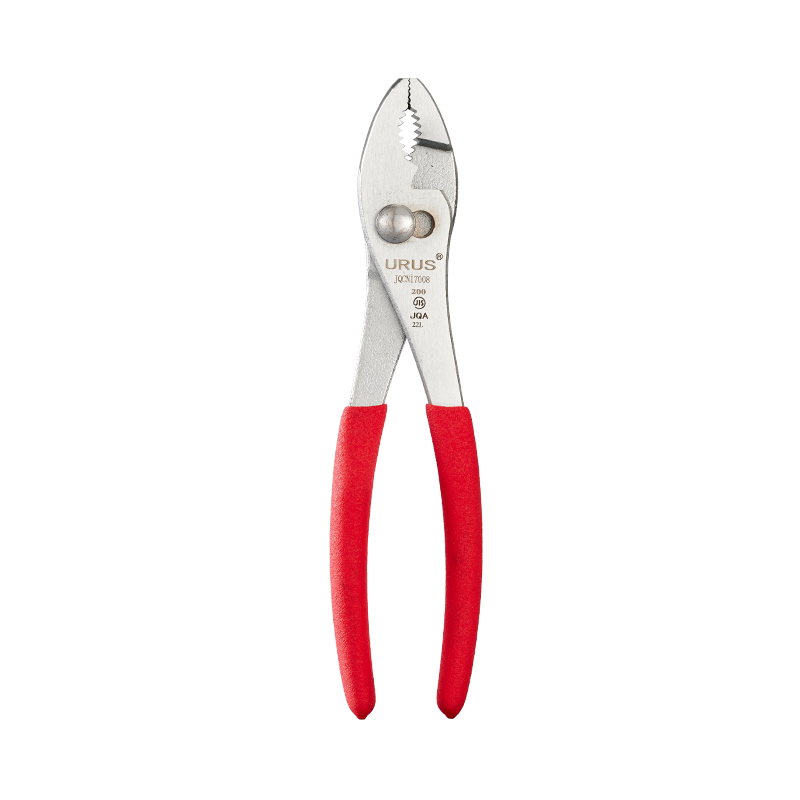
The humble slip joint pliers is a testament to practical engineering, offering remarkable versatility in a simple package. From learning the how to adjust slip joint pliers for different sizes to selecting the best slip joint pliers for household repairs, understanding this tool empowers users to tackle a multitude of tasks efficiently. Recognizing the key slip joint vs tongue and groove pliers differences ensures you have the right tool for specific jobs, while maintaining and lubricating slip joint pliers prolongs their service life. Above all, adhering to safety tips when using adjustable slip joint pliers protects both the user and the workpiece. Investing in a well-made pair from a professional manufacturer is an investment in quality, safety, and long-term performance for any toolkit.
[1] The Hand Tools Institute, "Pliers & Gripping Tools Guide," HTI Publications, 2022. (This source provides standardized definitions and comparative mechanics of different adjustable plier designs.)
[2] Industry Insights on Tool Manufacturing Quality, "Metallurgy and Process Control in Hand Tool Production," Journal of Manufacturing Engineering, Vol. 45, 2023. (This journal discusses the impact of material selection, forging processes, and quality certifications like ISO9001 on the durability and performance of hand tools.)
I. Introduction: Solving the "Impossible" Task The phrase "fitting a square peg into a round hole" is a universal symbol...
READ MOREMetalworking has always been a cornerstone of industrial development, shaping everything from automotive components to a...
READ MORE1. What Are Waterpump Pliers? – The Flexible “All-Rounder” Tool In modern industrial manufacturing and daily maintenance...
READ MORESelecting the appropriate industrial cutting tools is a critical decision that directly impacts manufacturing efficiency...
READ MORE
+86-573-84611229

+86-573-84611518


NO.35 Yucao Road, Ganyao Town, Jiashan City, Zhejiang Province, China
