

 中文简体
中文简体 English
 русский
 Inquiry
Don't hesitate to send a message
I. Introduction: Solving the "Impossible" Task The phrase "fitting a square peg into a round hole" is a universal symbol...
READ MOREFor craftsmen, technicians, and serious DIY enthusiasts, professional hand tools are the foundation of quality work. They are extensions of the skilled hand, enabling precision, efficiency, and safety. Unlike their consumer-grade counterparts, professional tools are engineered for durability, performance, and reliability under demanding conditions. This guide delves into the critical aspects of selecting, using, and understanding the value of high-caliber hand tools, providing actionable insights for professionals across industries.
Content
What truly distinguishes professional tools from standard ones? It's a combination of materials, engineering, and quality control. Professional tools are designed to withstand the rigors of daily use in workshops, construction sites, and production lines.
A well-equipped toolbox is curated for specific tasks. Understanding the primary categories helps in building a versatile and effective toolkit.
Drill bits are a perfect example where professional quality is non-negotiable. The best drill bits for hardened steel are typically made from cobalt (HSCO) or carbide-tipped materials. They retain their sharpness and dissipate heat efficiently, a key factor when tackling tough materials.
Making an informed choice often involves direct comparison. For instance, when building a foundational set, understanding the difference between an adjustable wrench and a combination wrench set is vital.
While an adjustable wrench offers versatility, a combination wrench set provides superior torque, fit, and durability for professional use. The fixed sizes of a combination wrench set offer a more secure grip on fastener heads, significantly reducing the risk of rounding.
| Feature | Adjustable Wrench | Combination Wrench Set |
|---|---|---|
| Primary Use | General-purpose, quick adjustments for various bolt sizes. | Professional-grade tasks requiring precise fit and high torque. |
| Fit & Security | Prone to slipping if not perfectly adjusted; can damage fasteners. | Precise machined openings provide a secure, non-slip fit. |
| Durability | Moving parts can wear or loosen over time. | Solid forged construction offers exceptional long-term durability. |
| Efficiency | Slower for repetitive tasks due to constant readjustment. | Faster workflow as the correct size is immediately available. |
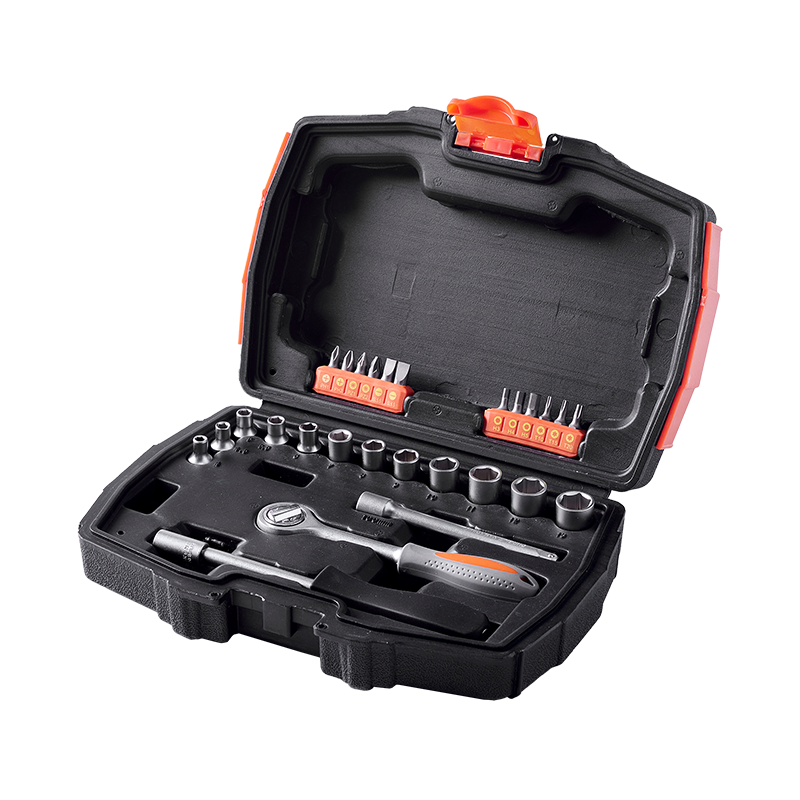
For those starting a trade or setting up a new workshop, what to look for in a professional hand tool set is a critical consideration. A comprehensive set from a reputable manufacturer offers consistency and can be more cost-effective. Key factors include:
Conversely, purchasing individual tools allows for curating the absolute best-in-class item for each specific function, which is a strategy favored by many seasoned professionals.
Beyond the basics, specialized tools elevate work quality and safety in specific fields.
Mechanics require tools capable of withstanding high torque and exposure to chemicals. Socket sets with thin walls for accessing tight spaces, flare nut wrenches for brake lines, and torque wrenches for precise fastener tightening are essential.
Here, precision screwdriver sets for electronics repair are indispensable. These sets feature a wide array of finely-machined, non-magnetic bits (Phillips, Torx, flathead, etc.) and often include anti-static handles. They are designed to work with tiny, delicate fasteners without causing damage. Similarly, professional hand tools for woodworking joinery like hand planes, chisels, and dovetail saws are valued for their razor-sharp edges and perfect balance, allowing for millimeter-perfect cuts and fits that power tools cannot always achieve.
Investing in professional tools is an investment in long-term productivity and safety. Quality manifests in several tangible ways.
Adherence to international standards is a key indicator of a manufacturer's commitment. For example, a company operating with an ISO9001:2015 certified quality management system, like Zhejiang URUS Tools Co., Ltd., demonstrates a structured approach to consistent quality, process improvement, and customer satisfaction. Founded in 1995 and recognized as a national high-tech enterprise, such a manufacturer integrates rigorous testing and R&D into production, ensuring that tools like their drill bits, pliers, and comprehensive hand tool sets meet the exacting demands of global markets in Japan, Europe, and the United States.
Proper care protects your investment and ensures tool performance.
The most critical factor is the balance of material quality and ergonomic design. A tool must be durable enough for the task while being comfortable and safe to use for extended periods, reducing user fatigue and risk of injury.
Signs include a rough or unfinished surface, loose moving parts, poor fit on fasteners (e.g., sloppy wrench openings), lightweight or hollow-feeling construction, and poorly stamped markings that will wear off quickly.
The price reflects the material (e.g., cobalt vs. standard HSS) and the manufacturing process. The best drill bits for hardened steel use premium alloys and precise geometry to maintain a cutting edge and dissipate heat, ensuring they last longer and perform better in tough applications.
For beginners or for establishing a basic workshop, a high-quality set is cost-effective and ensures tool compatibility. Experienced professionals often buy individual tools to get the best possible specific item for each frequent task, replacing and upgrading pieces over time.
It indicates the manufacturer has a documented, audited quality management system. This translates to more consistent product quality, reliable performance, and a lower chance of receiving a defective tool, as processes are controlled from raw material to finished product.
I. Introduction: Solving the "Impossible" Task The phrase "fitting a square peg into a round hole" is a universal symbol...
READ MOREMetalworking has always been a cornerstone of industrial development, shaping everything from automotive components to a...
READ MORE1. What Are Waterpump Pliers? – The Flexible “All-Rounder” Tool In modern industrial manufacturing and daily maintenance...
READ MORESelecting the appropriate industrial cutting tools is a critical decision that directly impacts manufacturing efficiency...
READ MORE
+86-573-84611229

+86-573-84611518


NO.35 Yucao Road, Ganyao Town, Jiashan City, Zhejiang Province, China
