

 中文简体
中文简体 English
 русский
 Inquiry
Don't hesitate to send a message
I. Introduction: Solving the "Impossible" Task The phrase "fitting a square peg into a round hole" is a universal symbol...
READ MOREContent
Impact wrenches and impact drills both use a rotary hammering mechanism to deliver high torque output, but they are engineered for fundamentally different tasks and are not interchangeable in professional use. An impact wrench is a fastening tool — it drives and removes large nuts, bolts, and socket-head fasteners at torques that far exceed what any drill could safely manage. An impact drill (impact driver) is primarily a driving and drilling tool — it drives screws rapidly and efficiently and can drill holes with appropriate bits, but operates at much lower torque than a wrench and uses a different fastener interface.
The confusion between the two tools is understandable — both produce a characteristic hammering sound and vibration under load — but treating them as equivalent leads to either damaged fasteners and stripped bits, or choosing an underpowered tool for heavy fastening work. The distinctions below clarify which tool is correct for which job.
Both tools use an internal hammer-and-anvil mechanism, but the mechanical design differs in ways that suit each tool to its intended application.
In an impact wrench, a heavy steel hammer strikes an anvil connected to the output drive in the horizontal (rotational) plane. Each blow delivers a sudden high-torque impulse to the output square drive — typically delivering 1,000–3,000 Nm or more in heavy-duty models. The impulse duration is very short (milliseconds), which means the reactive force transmitted back to the user's wrist is negligible even at torques that would physically spin a person off their feet if applied continuously. This is the core safety and ergonomic advantage of impact technology over conventional torque wrenches for high-torque work.
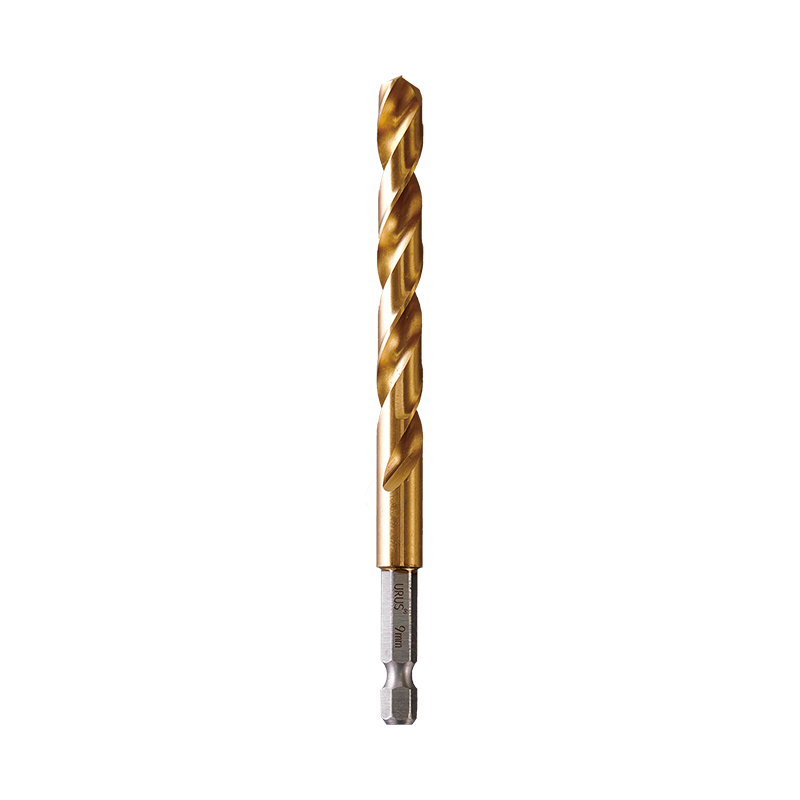
In an impact drill (driver), the mechanism is lighter and faster-cycling. The hammer strikes more frequently but with less mass, producing 150–350 Nm of torque in typical cordless models — adequate for screwdriving and light fastening but not remotely sufficient for automotive wheel bolts or structural fasteners. The output is a ¼-inch hex collet rather than a square drive, accepting screwdriving bits, hex-shank drill bits, and nut drivers — but not standard sockets.
| Feature | Impact Wrench | Impact Drill / Driver |
|---|---|---|
| Typical max torque | 500–3,000+ Nm | 150–350 Nm |
| Output drive | ½ in, ¾ in, or 1 in square drive | ¼ in hex collet |
| Accepts sockets | Yes — primary use | Only with hex-shank socket adaptor |
| Accepts screwdriver bits | With adaptor only | Yes — primary use |
| Drilling capability | Not designed for drilling | Yes, with hex-shank bits |
| Typical weight (cordless) | 2.0–4.5 kg | 1.0–1.5 kg |
An impact wrench is the correct tool whenever the fastener requires a socket, the torque demand is high, or the fastener may be corroded or overtightened. Key applications:
The impact driver excels in applications involving high volumes of screws, long fasteners in timber, or any situation where a conventional drill-driver stalls or causes wrist strain from reaction torque:
The decision follows directly from the work at hand. If the primary task involves nuts, bolts, and sockets at high torque — choose an impact wrench. If the primary task involves driving screws, mixing light fastening with drilling, or working in tight spaces — choose an impact driver. For most tradespeople and serious DIY users, both tools earn their place in the kit: they complement rather than replace each other.
Users who can only choose one tool should consider their dominant fastener type. Carpenters, joiners, and drywall installers rarely need an impact wrench. Mechanics, plant maintenance technicians, and steelworkers have limited use for an impact driver's ¼ in hex output. For genuinely mixed work — common in facilities maintenance, general contracting, and agricultural maintenance — a compact ½ in impact wrench and an 18V impact driver from the same battery platform covers virtually every fastening situation encountered in daily work.
I. Introduction: Solving the "Impossible" Task The phrase "fitting a square peg into a round hole" is a universal symbol...
READ MOREMetalworking has always been a cornerstone of industrial development, shaping everything from automotive components to a...
READ MORE1. What Are Waterpump Pliers? – The Flexible “All-Rounder” Tool In modern industrial manufacturing and daily maintenance...
READ MORESelecting the appropriate industrial cutting tools is a critical decision that directly impacts manufacturing efficiency...
READ MORE
+86-573-84611229

+86-573-84611518


NO.35 Yucao Road, Ganyao Town, Jiashan City, Zhejiang Province, China
