

 中文简体
中文简体 English
 русский
 Inquiry
Don't hesitate to send a message
I. Introduction: Solving the "Impossible" Task The phrase "fitting a square peg into a round hole" is a universal symbol...
READ MOREContent
Wood auger bits are specialized tools designed for one primary purpose: to bore deep, clean holes into wood efficiently. Unlike standard twist bits or spade bits, auger bits feature a long, spiral-shaped flute (or "screw") that serves a critical dual function. First, the sharp, threaded tip, known as the screw point, pulls the bit into the wood with minimal pressure from the user, allowing for straighter holes with less effort. Second, the continuous, deep flutes are engineered to rapidly channel chips and sawdust out of the hole as you drill. This efficient waste removal is the secret to achieving clean, smooth-sided holes, especially at greater depths where other bits would clog, overheat, and bind. The fundamental design principles of lead screw, cutting spurs, and flutes work in harmony to make the auger bit the go-to choice for timber framing, log construction, plumbing, and electrical installations in wooden structures where hole quality and depth are non-negotiable.
Selecting the perfect auger bit is not a one-size-fits-all decision. It requires a careful assessment of your specific project needs, the materials you'll be working with, and the tools at your disposal. A misguided choice can lead to frustrating results—rough holes, excessive labor, damaged workpieces, or even tool breakage. To navigate this selection process effectively, we must delve into five core aspects that define an auger bit's performance and suitability. By methodically evaluating the type of wood and project scale, the bit's length and diameter, the material and construction of the bit itself, the shank type compatible with your drill, and the specific design features for specialized tasks, you can make an informed decision that ensures professional-grade results. Mastery of these considerations transforms the tool from a simple hole-maker into a precision instrument for your woodworking endeavors.
The nature of your project and the specific wood you are drilling into are the foremost deciding factors. Using a bit designed for softwoods on a dense hardwood, or a general-purpose bit for a demanding, deep-hole task, will immediately set you up for subpar performance.
The density and abrasiveness of the wood directly impact bit choice. Softwoods like pine, cedar, and spruce are relatively forgiving. For these materials, a standard carbon steel auger bit with a sharp screw point and well-defined spurs will perform admirably for most general deep drilling tasks, such as running wiring or cables. The lower resistance allows the flutes to clear chips easily. Hardwoods like oak, maple, or hickory, however, present a formidable challenge. Their density creates immense friction and heat, demanding a bit with superior toughness and heat resistance. For hardwoods, bits made from high-speed steel (HSS) or those with titanium nitride coatings are essential. These materials hold an edge far longer and withstand higher temperatures. Furthermore, the cutting geometry often differs; bits optimized for hardwoods may have a slightly slower helix angle to provide more control and strength, preventing the aggressive pull of a fast-spiral bit from causing splintering or grabbing in the dense grain. The difference is palpable: a bit suited for hardwood will feel more controlled and produce a consistently smooth hole, whereas a softwood bit will dull rapidly, smoke, and produce a rougher finish in hardwood.
Beyond basic wood type, specific tasks call for specialized auger bits. For instance, wood auger bits for timber framing are a distinct category. They are typically extra-long, incredibly robust, and designed to bore large-diameter holes (e.g., for mortise and tenon joints or peg holes) through massive timbers. Their construction prioritizes rigidity and chip ejection over miles of drilling. Conversely, if your work involves creating holes for concealed wiring or plumbing where the entry and exit points must be perfectly clean, you need bits designed for precision. Another critical scenario is when working with irregular or valuable stock where tear-out on the back side of the hole is unacceptable. Here, the classic challenge of "how to prevent tear out when drilling deep holes with an auger bit" becomes paramount. The solution often lies in a combination of technique and bit design. Bits with very sharp, pronounced spurs that score the wood grain circumference before the main cutters engage are excellent for minimizing tear-out. Additionally, using a backer board or drilling until the screw point just penetrates and then completing the hole from the opposite side can yield pristine results. Understanding these nuances ensures your bit is an asset, not a liability, for your specialized application.
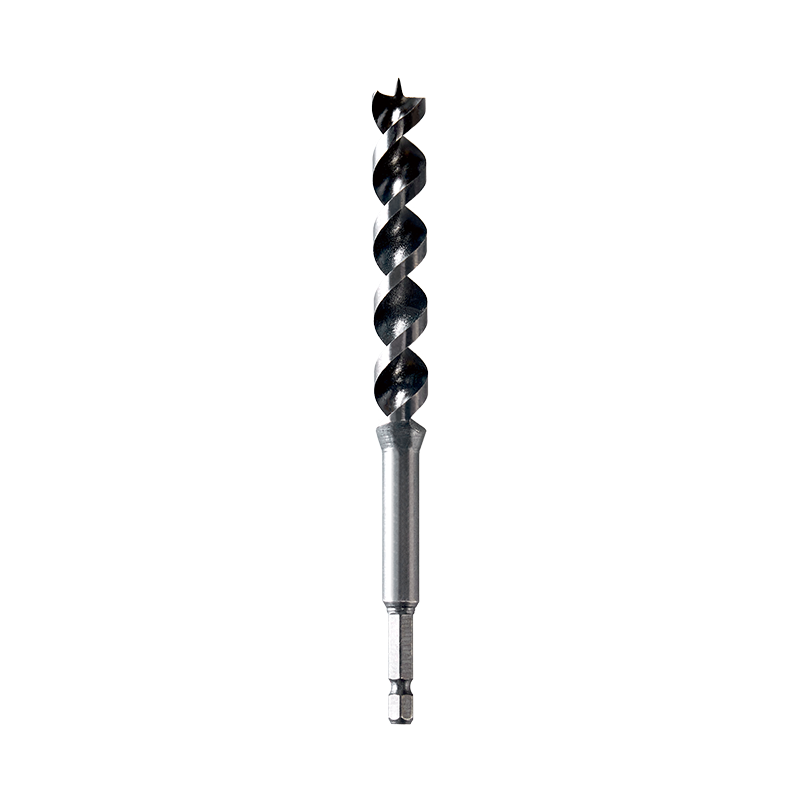
Choosing the correct length and diameter is a practical exercise in matching the tool to the physical requirements of the hole. An error here can halt a project entirely.
The rule for length is straightforward: the bit must be longer than the depth of the hole you need to drill. However, several nuances exist. Always account for the chuck of your drill and the screw point; a 12-inch long bit does not provide a 12-inch deep clean bore. The screw point and a portion of the flutes will protrude on the other side before the full diameter is cleared. For through-holes, ensure the bit's flute length (not just the overall length) exceeds the workpiece thickness. For blind holes (holes that do not go all the way through), the bit's cutting length must be greater than your desired depth. Common length categories include standard (6-10 inches), long (12-18 inches), and extra-long or ship auger bits (24 inches and beyond). Using a bit that is too short forces inefficient methods like drilling from both sides, risking misalignment. Using one excessively long for the task can lead to flexing or "wandering," especially at smaller diameters, resulting in an inaccurate hole. For the ultimate in deep, clean boring, many professionals seek out the best long length wood auger bits for clean deep boring. These are engineered with stiffness in mind—often with a thicker central core or specific helix design—to maintain straightness and efficient chip removal over their entire length, a critical factor when precision at depth is required.
Diameter selection is usually defined by the fastener or component the hole will accommodate (e.g., a 3/4" pipe, a 1/2" bolt). It's crucial to know if you need a precise size hole or one with slight clearance. Auger bits are commonly available in fractional inch sizes (1/4", 3/8", 1/2", etc.) and sometimes in metric. A key consideration is that auger bits, due to their cutting action, typically produce a hole that is very true to size. Unlike a spade bit that might vibrate and create an oversized hole, a sharp auger bit will cut cleanly to its stated diameter. Therefore, if you need a perfectly sized hole for a tight-fitting dowel, choose the exact bit diameter. For clearance holes for bolts or pipes, you might select a bit 1/16" larger than the nominal size. It’s worth noting that larger diameters (over 1 inch) require more torque from your drill. Always ensure your power tool is rated for the size of the auger bit you plan to use to avoid stalling or damaging the tool.
The material from which an auger bit is constructed determines its lifespan, its ability to hold an edge, and its suitability for different materials. Investing in quality here pays dividends in performance and longevity.
The market offers auger bits in several material grades, each with distinct advantages and cost implications.
The primary materials for wood auger bits are Carbon Steel, High-Speed Steel (HSS), and bits with Titanium Nitride (TiN) or other coatings. Carbon Steel bits are the most economical and are perfectly adequate for occasional use in softwoods and non-abrasive materials. However, they lose their edge relatively quickly, especially when encountering hardwoods, knots, or man-made woods like plywood which contain adhesive that is abrasive. High-Speed Steel (HSS) is a significant step up. It is a harder, more heat-resistant alloy that retains its sharpness much longer under demanding conditions. For frequent use, mixed materials, or hardwoods, HSS is the recommended minimum standard. It offers a superb balance of durability and cost for the serious DIYer or professional. At the top tier are bits with coatings like Titanium Nitride (TiN), a ceramic-based coating that is exceptionally hard and reduces friction. A TiN-coated bit runs cooler, resists corrosion, and its cutting edges last several times longer than uncoated HSS. The reduced friction also aids in chip ejection. The difference is most apparent in continuous use or with abrasive composites; a coated bit will maintain peak performance for hundreds of holes, while an uncoated bit may require sharpening after a few dozen.
| Material | Key Characteristics | Best For | Durability Consideration |
|---|---|---|---|
| Carbon Steel | Economical, easy to sharpen | Occasional softwood projects | Dulls quickly with hard/abrasive materials |
| High-Speed Steel (HSS) | Excellent edge retention, good heat resistance | Regular use, mixed woods, hardwoods | Substantially longer life than carbon steel |
| Coated (e.g., TiN) | Extreme hardness, low friction, corrosion resistant | Professional/heavy use, abrasive composites | Longest lifespan, maintains sharpness exceptionally well |
Beyond the base material, the manufacturing process is critical. A properly heat-treated bit has a hardened cutting edge for wear resistance but a tougher, more flexible core to prevent snapping under torsion. Look for bits where the cutting spurs and main lips are precisely machined and sharpened, not just stamped. The weld point where the flute is joined to the central core (in spirally wound bits) should be smooth and robust. A poorly made bit will have inconsistent cutting edges, weak points, and may even have a misaligned screw point, causing it to drill off-center. These flaws lead to rough holes, increased effort, and premature failure. In essence, the build quality transforms raw material into a reliable tool.
The shank is the interface between the bit and your drill. An incompatible shank will not fit, or worse, will fit poorly and create a dangerous situation with excessive runout or slippage.
The two most common shank types for power drill auger bits are hex (6-sided) and round. Each has its place. Hex shanks are the modern standard for use in quick-release chucks (common on cordless drills/drivers and impact drivers). They are designed to be gripped securely by the jaws of a keyless chuck, preventing the bit from spinning inside the chuck—a common failure point with round shanks under high torque. Their flat sides provide positive engagement. This makes hex shank wood auger bits for power drills an excellent and convenient choice for the vast majority of users. Round shanks are the traditional style and are required for use in a brace (a hand tool). They can also be used in a drill press or a handheld drill with a keyed chuck that tightens down with considerable force. However, in a keyless chuck, a round shank is more prone to slipping, especially when the bit encounters resistance or binds. This slippage can damage the shank, the chuck, and your workpiece. Therefore, for handheld power drilling, a hex shank is generally the safer, more reliable choice.
Regardless of shank type, a secure fit is non-negotiable. For hex shanks in a keyless chuck, open the chuck fully, insert the shank as deep as it will go, and then tighten firmly by hand. Give it an extra squeeze to ensure it's locked. For round shanks in a keyed chuck, use the key to tighten all three jaws sequentially until they are fully closed and gripping the shank uniformly. A loose bit is the primary cause of wobble, which leads to oversized, ragged holes and accelerates wear on the bit's cutting edges. Vibration is the enemy of a clean hole. A secure, concentric connection minimizes runout (the bit spinning off its true center), which is essential for the precision cutting action of the spurs and lips to work as designed.
Modern auger bits often incorporate design features that solve specific problems or enhance performance in challenging conditions. Recognizing these features allows you to select a bit that excels where a standard design might struggle.
The screw point is not just a centering device; its design dictates the feed rate and starting accuracy. A sharp, finely-threaded point provides a slower, more controlled pull into the wood, ideal for hardwoods or precision work where you want to prevent the bit from "grabbing" and racing ahead. In contrast, a coarse, aggressively-threaded screw point pulls the bit in rapidly, making fast work of deep holes in softwoods or timber. Some bits feature a "self-feeding" tip with large, pronounced threads that almost eliminate the need for forward pressure from the user—the drill's rotation does all the work. This can reduce fatigue on large projects but requires a powerful drill and a firm grip to control.
The flute is the highway for chips. A single, continuous spiral is classic, but some bits feature a "double flute" or "parallel twin flute" design. This can improve chip breakage and ejection, particularly in stringy woods where long chips can clog a single flute. The geometry of the flute—its pitch (how tightly it is wound) and depth—affects its carrying capacity. A fast, deep-pitch flute moves chips out quickly but may be slightly less rigid. A slower pitch provides more body and strength. For the cleanest holes in wet, resinous, or frozen wood—conditions where chips are gummy and prone to clogging—a specific design is paramount. This is where identifying the right auger bit design for chip removal in wet wood becomes critical. Bits optimized for this often have highly polished flutes to reduce friction and adhesion, a slightly more open spiral to prevent compaction, and sometimes a special surface treatment to resist gumming up. Using a standard bit in wet wood often results in a packed flute, stalled drill, and a burned, ragged hole.
Certain woods pose unique challenges. Tear-out in plywood or veneer can be severe. For these, bits with ultra-sharp spurs and a slower feed are best. Stringy woods like pressure-treated pine or some hardwoods can produce long, winding chips. Here, a bit with a flute designed to shear chips into smaller pieces is beneficial. And for the ultimate test—boring into composite materials, laminated beams, or wood with embedded grit—the question of auger bits for hardwood vs pressure treated lumber performance highlights a key distinction. Pressure-treated lumber is often softwood (like pine) but is infused with chemical preservatives and is frequently wet, making it both corrosive and prone to clogging. A bit that performs well in dry, natural hardwood (like an HSS bit with a controlled feed) might not be the best for pressure-treated wood. For the latter, a corrosion-resistant coated bit with aggressive chip-clearing flutes is often the superior choice, as it resists the abrasive and adhesive nature of the treated material while efficiently clearing the damp, compressed chips.
Armed with this detailed knowledge, your selection process becomes a systematic checklist. Begin by defining your project: What is the wood type? How deep and what diameter hole is needed? Is it a through-hole or blind hole? Are there issues like tear-out or wet wood to consider? Next, use your project parameters to filter options. For deep holes in dry hardwoods, prioritize best long length wood auger bits for clean deep boring made from HSS or coated steel with a sharp, fine-threaded screw point. For timber framing, seek out specialized, extra-robust wood auger bits for timber framing. If using a modern cordless drill/driver, default to hex shank wood auger bits for power drills for safety and grip. When facing damp lumber or outdoor projects, actively research the right auger bit design for chip removal in wet wood. Finally, always compare the performance expectations, understanding that a bit optimized for one condition, like natural hardwood, may behave differently in another, hence the importance of the auger bits for hardwood vs pressure treated lumber performance consideration. By methodically applying these filters, you move beyond guesswork to a confident, informed selection that guarantees your drilling will be both deep and impeccably clean.
I. Introduction: Solving the "Impossible" Task The phrase "fitting a square peg into a round hole" is a universal symbol...
READ MOREMetalworking has always been a cornerstone of industrial development, shaping everything from automotive components to a...
READ MORE1. What Are Waterpump Pliers? – The Flexible “All-Rounder” Tool In modern industrial manufacturing and daily maintenance...
READ MORESelecting the appropriate industrial cutting tools is a critical decision that directly impacts manufacturing efficiency...
READ MORE
+86-573-84611229

+86-573-84611518


NO.35 Yucao Road, Ganyao Town, Jiashan City, Zhejiang Province, China
