

 中文简体
中文简体 English
 русский
 Inquiry
Don't hesitate to send a message
I. Introduction: Solving the "Impossible" Task The phrase "fitting a square peg into a round hole" is a universal symbol...
READ MORESelecting appropriate Industrial Tools is a critical decision in manufacturing environments where efficiency, precision, and safety directly affect operational performance. Different production processes place distinct technical demands on tools, making application-specific selection essential rather than relying on generic solutions.
According to the latest updates from the International Organization for Standardization (ISO) and global manufacturing associations, the period from 2024 to 2025 has seen increased emphasis on standardized tooling performance, traceability, and lifecycle durability to support automation and advanced manufacturing systems.
Source: International Organization for Standardization (ISO)
Content
Industrial Tools refer to purpose-built hand tools and tooling components designed for repetitive, high-load, and precision-driven manufacturing tasks. Unlike general-purpose tools, they are engineered to meet specific mechanical tolerances, material hardness requirements, and ergonomic standards.
In modern factories, especially those integrating lean manufacturing and automated workflows, industrial tools for manufacturing applications must deliver consistent performance across long production cycles while minimizing downtime and operator fatigue.
Manufacturing environments vary significantly in production intensity. High-volume lines require tools capable of maintaining dimensional stability and cutting accuracy over extended use.
| Factor | Low-Volume Production | High-Volume Production |
| Tool Load | Intermittent | Continuous |
| Wear Tolerance | Moderate | Low tolerance for degradation |
| Maintenance Frequency | Occasional | Planned and systematic |
The hardness and machinability of workpiece materials directly affect tool geometry and coating requirements, particularly for industrial drill bits and hand tools.
Drilling remains one of the most tool-intensive manufacturing processes. Selecting the correct drill bit design ensures hole accuracy, surface finish, and tool longevity.
| Drilling Application | Tool Requirement | Selection Focus |
| Structural Components | High rigidity drill bits | Dimensional stability |
| Sheet Metal | Sharp edge geometry | Burr reduction |
| Precision Parts | Tight tolerance tools | Hole consistency |
For assembly lines, industrial hand tools for factories such as pliers and fastening tools must balance gripping force, alignment accuracy, and ergonomic handling.
Maintenance-focused tools prioritize versatility and durability. They are often exposed to variable working conditions, requiring corrosion resistance and structural reliability.
Material selection for Industrial Tools influences wear resistance, impact strength, and fatigue life. Precision machining ensures repeatability, while surface treatments help manage friction and corrosion.
According to industry analysis published in 2024, manufacturers are increasingly shifting toward tool designs that extend service life while reducing total replacement frequency, supporting sustainability and cost efficiency.
Source: Global Industrial Tools Market Analysis
Compliance with recognized standards is essential when evaluating ISO certified industrial tools manufacturer capabilities. Certification frameworks such as ISO 9001:2015 emphasize process control, traceability, and continuous improvement.
Established manufacturers with integrated production facilities offer greater control over tooling accuracy and delivery stability. Zhejiang URUS Tools Co., Ltd., founded in 1995, operates large-scale production facilities supported by ISO-certified systems and advanced manufacturing infrastructure.
With decades of experience in producing drill bits, pliers, and hand tool sets, URUS Tools supports international markets with stable supply capacity and technical consistency for long-term manufacturing partnerships.
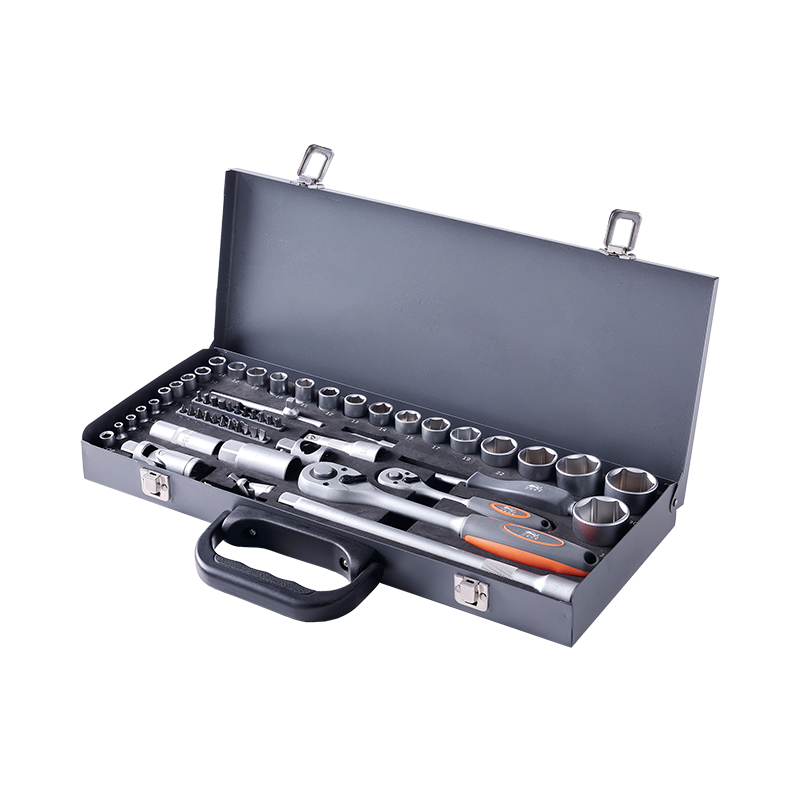
Choosing the right tools reduces scrap rates, minimizes rework, and supports predictable maintenance cycles. From an engineering perspective, understanding how to choose industrial tools is directly linked to optimizing throughput and operational cost efficiency.
They are used for drilling, fastening, assembly, and maintenance tasks requiring precision, durability, and repeatable performance.
Selection should be based on material type, production volume, required precision, and compliance with international standards.
ISO certifications indicate standardized quality control, process consistency, and traceability in manufacturing.
Yes, when designed with dimensional accuracy and ergonomic consistency, they integrate well into semi-automated workflows.
Properly selected tools reduce downtime, lower replacement frequency, and improve overall manufacturing efficiency.
I. Introduction: Solving the "Impossible" Task The phrase "fitting a square peg into a round hole" is a universal symbol...
READ MOREMetalworking has always been a cornerstone of industrial development, shaping everything from automotive components to a...
READ MORE1. What Are Waterpump Pliers? – The Flexible “All-Rounder” Tool In modern industrial manufacturing and daily maintenance...
READ MORESelecting the appropriate industrial cutting tools is a critical decision that directly impacts manufacturing efficiency...
READ MORE
+86-573-84611229

+86-573-84611518


NO.35 Yucao Road, Ganyao Town, Jiashan City, Zhejiang Province, China
