

 中文简体
中文简体 English
 русский
 Inquiry
Don't hesitate to send a message
I. Introduction: Solving the "Impossible" Task The phrase "fitting a square peg into a round hole" is a universal symbol...
READ MOREContent
Buying pliers seems simple until you're standing in front of a wall of options — different jaw shapes, handle designs, and quality tiers that all claim to do the job. This guide covers how to choose the right pliers for your specific work, what separates heavy duty and professional-grade tools from basic ones, and why handle design matters more than most buyers expect.
Choosing the right pliers starts with identifying the task, not the tool. Gripping, cutting, clamping, and precision handling each call for a different jaw shape and mechanism, and buying based on task first prevents ending up with a tool that technically works but fights you the entire time.
Match jaw shape and mechanism to gripping, cutting, or clamping needs.
Forged steel construction holds up to repeated stress better than stamped alternatives.
Grip material and shape affect comfort and control during extended use.
Tight, aligned jaws grip securely without slipping under load.
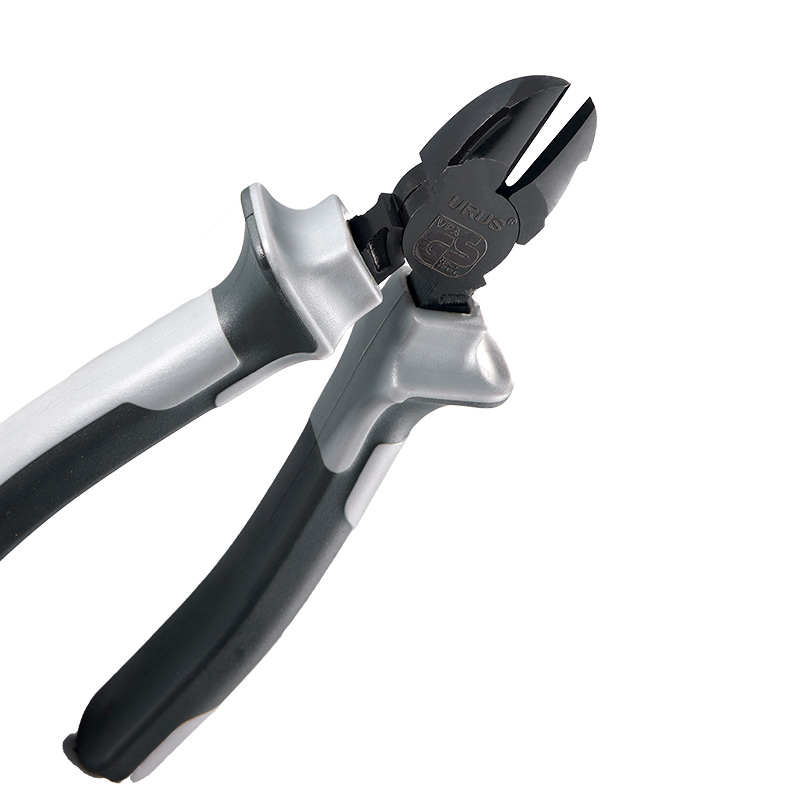
Jaw alignment: close the jaws and check for even contact along the full length — misaligned jaws slip and damage fasteners.
Pivot tension: the joint should move smoothly without excessive play or stiffness.
Cutting edge sharpness: for cutting pliers, confirm the edges meet cleanly with no visible gap.
Handle comfort: test the grip in hand — a tool that's uncomfortable in the store will be worse after an hour of real use.
Warranty and materials: higher-quality pliers are often backed by longer warranties, which can be a useful quality signal.
For general home improvement work, a small core set covers most needs: combination pliers for everyday gripping and light cutting, long nose pliers for tight spaces, and groove joint pliers for larger fittings and pipes. These three cover the majority of household repair, furniture assembly, and general maintenance tasks without requiring a full specialized toolkit.
Electrical work has specific requirements beyond general gripping: long nose pliers for precise wire positioning and forming loops, diagonal cutting pliers for clean wire cuts, and wire strippers for removing insulation without nicking the conductor. For any pliers used near live circuits, insulated handles rated for electrical work are a safety requirement, not just a comfort feature — standard rubber-coated grips are not a substitute for tools specifically rated for insulation.
Automotive repair often calls for pliers that can handle both tight spaces and higher mechanical stress. Locking pliers are especially useful for holding parts steady during repairs, removing stripped fasteners, or acting as a temporary clamp. Long nose pliers with an angled tip help reach into engine bays and tight assemblies, while heavy duty combination pliers handle general gripping and twisting tasks under higher force than typical household repairs require.
Plumbing work is where groove joint (channel-lock) pliers earn their reputation. Their wide adjustable jaw range handles everything from small fittings to large pipe nuts, and their long handles provide the leverage needed to loosen fittings that have corroded or been over-tightened. A second, smaller pair is often useful for tighter spaces under sinks or in wall cavities where a full-size groove joint plier won't fit.
| Factor | Standard Pliers | Heavy Duty Pliers |
|---|---|---|
| Steel construction | Standard carbon steel | Higher-grade forged steel, often with alloy content |
| Jaw hardness | Moderate, suited to light-duty tasks | Higher hardness rating for demanding, repeated use |
| Pivot durability | Standard rivet or bolt pivot | Reinforced pivot rated for higher clamping force |
| Typical user | Occasional household use | Frequent professional or industrial use |
Comparison of standard and heavy duty hardware pliers construction.
Professional hardware pliers are built for daily, repeated use rather than occasional household tasks, which shows up in tighter manufacturing tolerances, higher-grade steel, and more durable handle materials. For anyone using pliers as a core part of their daily work — electricians, mechanics, and tradespeople — the higher upfront cost of professional-grade tools is usually offset by longer service life and more consistent performance under regular use, compared to replacing lower-quality tools repeatedly.
Jaw material: forged chrome-vanadium or chrome-molybdenum steel offers better strength and edge retention than basic carbon steel.
Handle grip: dual-material (rubber-over-plastic) grips improve comfort and reduce hand fatigue during extended use.
Insulation rating: pliers intended for electrical work should carry a specific voltage insulation rating, not just a rubber-coated appearance.
Spring-loaded jaws: some pliers include a return spring that automatically reopens the jaws, reducing hand fatigue over repetitive tasks.
Handle design in particular is easy to overlook when buying, but it directly affects grip strength, control, and fatigue over a long work session — two pliers with identical jaws can feel completely different in hand depending on handle shape and material alone.
I. Introduction: Solving the "Impossible" Task The phrase "fitting a square peg into a round hole" is a universal symbol...
READ MOREMetalworking has always been a cornerstone of industrial development, shaping everything from automotive components to a...
READ MORE1. What Are Waterpump Pliers? – The Flexible “All-Rounder” Tool In modern industrial manufacturing and daily maintenance...
READ MORESelecting the appropriate industrial cutting tools is a critical decision that directly impacts manufacturing efficiency...
READ MORE
+86-573-84611229

+86-573-84611518


NO.35 Yucao Road, Ganyao Town, Jiashan City, Zhejiang Province, China
