

 中文简体
中文简体 English
 русский
 Inquiry
Don't hesitate to send a message
I. Introduction: Solving the "Impossible" Task The phrase "fitting a square peg into a round hole" is a universal symbol...
READ MOREContent
A hand tool kit is an investment that compounds over time. The right set of mechanics tools, purchased once with attention to quality, coverage, and intended use, will serve for decades -- outlasting cheaper alternatives many times over and reducing the frustration and productivity loss of reaching for a tool that is not there, does not fit, or breaks under load. The wrong kit, purchased on price alone, becomes a problem that grows with every job: missing sizes, stripped drives, handles that slip, and ratchets that bind under torque.
The mechanics tools market spans a wide range from complete professional-grade sets intended for full-time shop use through mid-range DIY and home garage kits to entry-level starter sets for occasional use. Navigating this market intelligently requires understanding what each type of kit contains, which tools are essential versus supplementary, what construction quality indicators actually predict durability, and how to match a kit to the specific work it will be used for.
This guide covers the categories of tools found in hand tool kits and mechanics tool sets, the quality factors that distinguish the best options at each price tier, and the practical considerations for selecting a kit for automotive work, general maintenance, construction, or professional trade use.
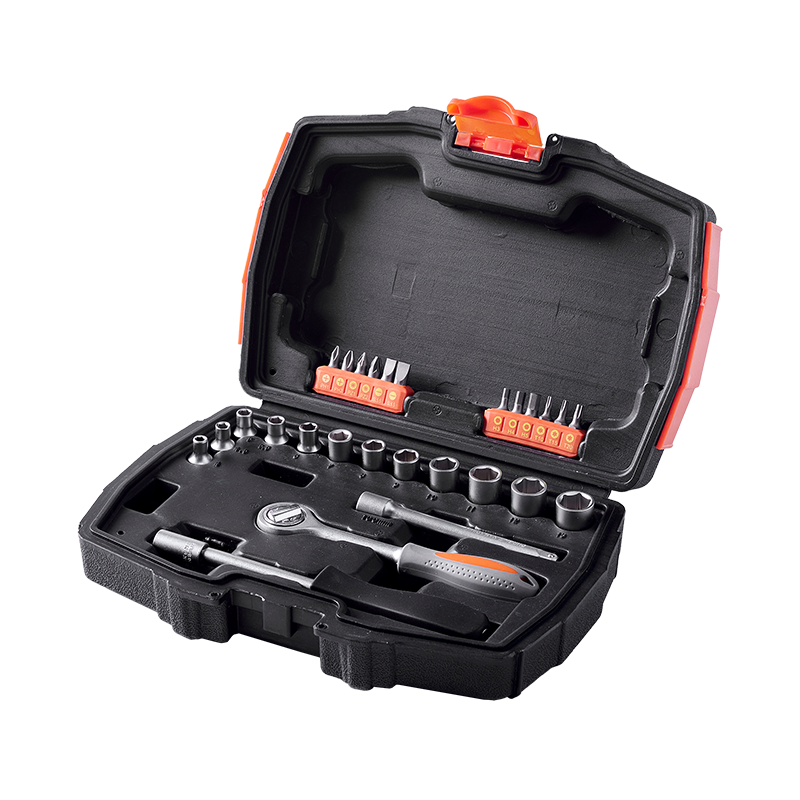
A mechanics tool kit -- as distinct from a general home maintenance kit or a specialized trade tool set -- is built around the fastener-driving tools that are the foundation of automotive, mechanical, and industrial maintenance work. The core categories are consistent across professional and consumer-grade sets; the differences lie in size coverage, construction quality, and whether specialty tools are included.
Sockets are hollow cylinders with an internal hex drive that fit over fastener heads (bolts, nuts, and hex-socket fasteners) and connect to a ratchet handle, breaker bar, or extension bar. A complete socket set for general automotive use covers both SAE (imperial, in fractional inch sizes) and metric sizes, in two or three drive sizes -- 1/4 inch drive for small fasteners and tight spaces, 3/8 inch drive for the majority of standard work, and 1/2 inch drive for larger fasteners and high-torque applications. Deep sockets (longer than standard height to reach fasteners on long studs or recessed in a bore) are included in most complete mechanics sets alongside the standard-depth shallow sockets.
The ratchet mechanism is the most used component of any socket set and the most important quality indicator. A fine-tooth ratchet (72-tooth or higher is common in quality tools) allows operation in tighter arcs than a coarser mechanism -- critical in confined spaces where swing angle is limited to 5 degrees or less. The number of teeth directly determines the minimum arc of rotation: a 72-tooth ratchet requires only 5 degrees of swing per click, while a 24-tooth ratchet requires 15 degrees. For professional mechanics working in engine bays and under dashboards, fine-tooth ratchets are not a luxury feature but a practical necessity.
Combination wrenches have an open end on one side and a box end (ring) on the other, both sized for the same fastener. The open end provides fast engagement from any angle and the ability to work in spaces too tight for a socket; the box end provides the enclosed engagement and the safety of full hex contact that prevents rounding of fastener corners when high torque is applied. A quality mechanics tool kit includes a set of combination wrenches in both metric and SAE sizes covering the full range of fastener sizes relevant to automotive and mechanical work -- typically 6mm to 24mm in metric and 1/4 inch to 15/16 inch in SAE as the core coverage, with larger sizes in professional sets.
Ratcheting combination wrenches -- which use an internal ratchet mechanism in the box end to allow one-directional rotation without removing the wrench from the fastener -- significantly accelerate fastener-driving in restricted-swing situations and are a standard inclusion in mid-range and premium mechanics tool sets.
A mechanics tool set typically includes screwdrivers in the most common drive types: Phillips (cross-head) in #1, #2, and #3; flat-blade in multiple tip widths; and increasingly, Torx (star drive) and Pozidrive in consumer-oriented sets, reflecting the growing use of these drive types in modern automotive fasteners. Handle design and material significantly affect comfort and performance -- a properly designed handle with appropriate diameter, length, and ergonomic grip material allows higher torque transmission with less hand fatigue than a simple cylindrical handle.
Pliers in a mechanics kit typically include slip-joint pliers, needle-nose (long-nose) pliers, diagonal cutting pliers (wire cutters), and lineman's pliers as the baseline. More complete mechanics sets add locking pliers (Vise-Grips), circlip pliers (both snap-ring internal and external), water pump pliers (Channellock style), and hose clamp pliers. Plier quality is determined by jaw alignment (the two jaw faces should meet evenly and grip without twisting), pivot joint tightness (no lateral play under load), cutting edge hardness (for wire cutters, the blades should cleanly cut copper wire without deforming the cut ends), and grip material comfort under extended use.
A ball-peen hammer (with a rounded second face opposite the flat striking face, used for metalwork) and a dead-blow or rubber mallet (which does not rebound from the struck surface) cover the striking requirements of most mechanics work. Professional mechanics sets may also include a brass-faced hammer (used where a steel hammer would damage the struck surface) and a punch and chisel set for driving pins, removing stuck components, and cutting soft metal.
Hex keys (Allen wrenches) engage the internal hex recesses of socket cap screws, set screws, and fasteners in a wide range of metric and SAE sizes. Most mechanics kits include both standard hex keys and ball-end hex keys -- the ball-end design allows the key to be engaged at an angle of up to 25 to 30 degrees from the fastener axis, useful when access for a straight-line engagement is obstructed. Torx key sets are increasingly included alongside or in place of hex keys in automotive mechanics sets to cover the T10 through T60 Torx drive fasteners common in modern vehicle assembly.
The price range for hand tool kits of nominally similar content spans from under fifty dollars to several thousand dollars. Understanding what is actually different between a low-cost kit and a premium one -- beyond branding and packaging -- allows a more informed trade-off between budget and value.
The most important quality differentiator in mechanics tools is the steel alloy used for the working surfaces and the heat treatment applied to achieve the required hardness and toughness combination. Chrome vanadium steel (Cr-V) is the standard alloy for quality hand tools -- it provides the hardness needed for wear resistance and torque capacity alongside the toughness needed to absorb shock without brittle fracture. Chrome molybdenum steel (Cr-Mo) is used for impact sockets and high-torque socket applications where the material must absorb the shock loading of impact drivers without shattering. Tool steel (S2, S7) is used for screwdriver bits and impact-rated drive tools.
Low-cost tools often use lower-grade carbon steel or inadequately heat-treated Cr-V, which produces tools that look identical to quality alternatives but deform under torque, round off on fastener corners, or develop surface corrosion that makes them difficult to use cleanly. The material specification is rarely disclosed on packaging, which is why purchasing from brands with a documented quality reputation -- and checking warranty terms, which are often a reliable proxy for manufacturer confidence in material quality -- is the most practical approach for buyers who cannot test the tool before purchase.
Sockets and wrenches engage fastener heads through either a six-point (hex) or twelve-point (bi-hex) internal profile. Six-point profiles contact the fastener on its flat faces -- the largest, strongest part of the hex geometry -- distributing the drive force over a larger area and reducing the tendency to round off fastener corners under high torque or when working with corroded or worn fasteners. Twelve-point profiles contact fastener corners, which are the thinner, weaker part of the hex geometry, but allow faster engagement (the tool can be placed at any of twelve positions rather than six) and are better suited to six-point fasteners where precise engagement is important.
For professional mechanics work -- particularly on corroded or overtightened fasteners that resist removal -- six-point sockets and combination wrenches are strongly preferred. For assembly work on new, properly torqued fasteners, twelve-point tools work well and the faster engagement is an efficiency benefit. Premium mechanics sets include both profiles for flexibility.
The surface finish on quality hand tools serves both aesthetic and functional purposes. Chrome plating on the exterior surfaces of sockets, wrenches, and ratchets provides corrosion protection, reduces friction between the tool body and the environment, and makes oil and dirt easier to clean from the tool surface. The finish quality is a reliable visual indicator of manufacturing attention to detail -- polished chrome plating with no visible pits, grinding marks, or plating voids is indicative of the controlled manufacturing process that produces consistent dimensional accuracy and material quality throughout the tool.
The warranty offered by the tool manufacturer is a meaningful quality signal in the mechanics tools market. Manufacturers who offer a lifetime warranty on hand tools (common among major brands including Snap-on, Matco, Mac Tools, Craftsman, and Proto in North America, and Bahco, Wera, and Gedore in Europe) are committing to replace any tool that fails under normal use indefinitely -- a commitment that is only economically viable if the tools are built to last. Entry-level tools with 90-day or 1-year warranties are manufactured to a cost target that the warranty terms reflect accurately.
Mechanics tool kits are marketed by piece count -- 40-piece, 100-piece, 200-piece, 500-piece -- but piece count alone is a misleading specification because counting conventions vary between manufacturers. A kit described as 200 pieces may include each socket, each extension bar, each ratchet, each screwdriver, and each hex key as a separate piece, while another kit counts the carrying case as a piece and the ratchet and its reversing mechanism separately. The piece count is better understood as a rough guide to coverage breadth rather than a direct comparison number.
Compact kits in this range typically include one or two ratchet drives (usually 1/4 inch and 3/8 inch), a limited socket set covering the most common sizes in one measurement system (metric or SAE, rarely both in this size tier), a set of combination wrenches in the most common sizes, a small selection of screwdrivers, and basic pliers. These kits are suited to occasional home maintenance, bicycle work, and simple appliance repair where the full range of automotive and mechanical work is not required. They are poor value for automotive work because the missing sizes will be encountered immediately in any real job.
Kits in the 100 to 200 piece range begin to provide meaningful coverage for automotive and home maintenance work. A well-specified kit in this range will include sockets in both SAE and metric from 1/4 inch to 3/4 inch drive (with 1/4, 3/8, and 1/2 inch drives represented), both shallow and deep sockets in the main sizes, extension bars and a universal joint, a complete combination wrench set in metric (6 to 22mm) and SAE (1/4 to 7/8 inch), a full set of Phillips and flat screwdrivers, pliers (slip-joint, needle-nose, and diagonal), hex keys in metric and SAE, and a ball-peen hammer or mallet. This tier represents the entry point for kits that can realistically support complete automotive maintenance work -- oil changes, brake service, suspension components, and belt replacement -- without immediately requiring supplementary tools on every job.
Kits from 200 to 600 pieces provide coverage for professional-level automotive and mechanical work. In addition to complete socket and wrench coverage in both measurement systems, these kits typically include ratcheting combination wrenches, Torx sockets and hex bit sockets, deep impact sockets for use with impact wrenches, wobble extension bars, flex-head ratchets, long and stubby handle screwdrivers in multiple drive types, locking pliers and specialty pliers, punch and chisel sets, and a larger selection of hex and Torx keys. The tool organization system -- the tray, roll, or case in which the tools are stored -- becomes as important at this tier as in smaller kits, because finding tools quickly in a working environment directly affects productivity.
Large master sets at 600 pieces and above are typically intended for professional shop use -- either a complete tool kit for a new technician entering the trade or a comprehensive supplementary set for an established mechanic adding coverage to an existing inventory. At this level, the kit may include specialty tools specific to a discipline (brake service tools, transmission tools, electrical diagnostic tools, timing service tools), impact-rated socket sets across multiple drive sizes, multiple ratchet styles (standard, flex-head, micro-head, stubby), and a full range of nut driver bits and adapters. The storage system at this level is typically a multi-tray chest or roller cabinet insert rather than a portable case.
Even the most comprehensive general mechanics tool kit does not include the specialty tools required for specific repairs. Professional mechanics maintain these separately and add them as new vehicle types and new repair procedures require. Understanding the categories of specialty mechanics tools helps in planning a tool collection that grows intelligently rather than reactively.
A torque wrench is essential for any fastener that has a specified tightening torque -- engine head bolts, wheel lug nuts, transmission drain plugs, and suspension components all have critical torque specifications that cannot be judged accurately by feel alone. Click-type torque wrenches (which emit an audible and tactile click when the preset torque is reached) are the most widely used type in automotive mechanics. Beam-type torque wrenches provide a direct analog reading and require no calibration maintenance but are less convenient for work in confined spaces. Digital torque wrenches with torque-angle functionality are used for precision applications including cylinder head assembly where torque-to-yield bolt procedures require combined torque and angle measurement.
Modern vehicles use a wide range of fastener drive types beyond standard hex -- Torx, Torx Plus, Pentalobe, Spline (XZN), double-hex, and others appear across different manufacturer and model lines. Specialty bit socket sets that cover these drive types are necessary for complete coverage of modern vehicle work. Impact socket sets in 1/2 inch drive are required for use with pneumatic or electric impact wrenches for wheel removal, suspension work, and any application where the extra speed and torque of an impact tool is beneficial.
Brake caliper wind-back tools (for retracting pistons on disc brake calipers with integral parking brakes that require rotation during retraction), caliper spreaders, brake bleeder kits, and dust cap removal tools are practical additions for any mechanic performing regular brake service. Ball joint and tie rod end separators, spring compressors, and strut tools cover the most common suspension service procedures and are available as individual specialized tools or as kits.
Mechanical pullers -- two-jaw, three-jaw, and slide hammer configurations -- are required for removing wheel bearings, brake rotors, pulleys, and pressed-on components that cannot be removed by striking alone without risk of damage. Bearing press sets allow bearings to be installed and removed from housings and shafts without damage to the bearing or the component. These tools represent a significant investment individually but collectively cover the repair procedures that cannot be completed without them.
A set of pry bars in different lengths (6-inch to 36-inch) covers the range of leverage requirements from gently separating plastic trim panels to displacing large mechanical components. Trim removal tools in plastic rather than steel are essential for modern vehicles with extensive plastic interior and exterior panels where a steel pry bar would cause cosmetic damage instantly. A magnetic parts tray and a flexible magnetic pickup tool prevent the dropped bolt-in-inaccessible-location scenario that costs disproportionate time in any workshop.
The organization and storage of mechanics tools is as important to long-term productivity as the quality of the tools themselves. A tool that cannot be found quickly is as useless in the moment as a tool that was never purchased, and tools stored poorly -- thrown loose in a drawer, piled in a box, or left exposed to moisture -- develop surface corrosion, lose their edge, and degrade faster than tools properly stored.
Most mechanics tool kits are supplied with a molded plastic case with individual recesses shaped for each tool. This type of organization provides instant visual inventory -- any empty space indicates a missing tool -- and protects tools during transport. The quality of the case varies considerably: premium cases use robust impact-resistant materials with positive-latch closures that maintain tool position under transport vibration; budget cases use thinner plastic that cracks at hinges and latches after modest use. For a kit that will be carried frequently, the case quality matters as much as the tools inside it.
Tool rolls -- canvas or leather organizers with individual pockets for each wrench or screwdriver -- are the traditional professional storage format for combination wrenches and screwdrivers. They are compact, protect the tool surfaces from contact with each other, and provide fast visual access to the tool needed. High-quality canvas or waxed cotton tool rolls are durable enough for decades of professional use and age in a way that adds character rather than deteriorating.
For a fixed workshop or garage setting, a tool chest (the upper unit with smaller drawers for frequently used tools) and roller cabinet (the lower unit with larger drawers for organized storage and a work surface on top) combination is the standard professional solution. Ball-bearing drawer slides, drawer locks, and full-extension drawers that allow complete access to the full drawer depth are the features that distinguish quality workshop storage from economy alternatives. Foam drawer inserts cut to the profile of specific tools optimize storage density and provide instant visual confirmation of tool inventory -- the same principle as molded tray cases but applied at workshop scale.
The best mechanics tool kit is the one that matches the actual work being done, the frequency of that work, the skill level and experience of the user, and the budget available. The following framework provides a practical basis for navigating the choice.
I. Introduction: Solving the "Impossible" Task The phrase "fitting a square peg into a round hole" is a universal symbol...
READ MOREMetalworking has always been a cornerstone of industrial development, shaping everything from automotive components to a...
READ MORE1. What Are Waterpump Pliers? – The Flexible “All-Rounder” Tool In modern industrial manufacturing and daily maintenance...
READ MORESelecting the appropriate industrial cutting tools is a critical decision that directly impacts manufacturing efficiency...
READ MORE
+86-573-84611229

+86-573-84611518


NO.35 Yucao Road, Ganyao Town, Jiashan City, Zhejiang Province, China
