

 中文简体
中文简体 English
 русский
 Inquiry
Don't hesitate to send a message
I. Introduction: Solving the "Impossible" Task The phrase "fitting a square peg into a round hole" is a universal symbol...
READ MOREContent
A drill bit is a cutting tool mounted in a drilling machine or hand drill that removes material to create cylindrical holes. The bit rotates at speed while being pressed axially into the workpiece; cutting edges at the tip shear away material, which is simultaneously evacuated through helical flutes along the bit's body. The drill bit is distinct from the drill itself — the drill is the power source and motion mechanism, while the bit is the interchangeable cutting element that contacts and removes material.
The fundamental geometry of a drill bit involves three critical features: the point angle at the tip (which determines how the bit centres and initiates the cut), the helix angle of the flutes (which governs chip evacuation efficiency and cutting aggressiveness), and the cutting edge geometry (which defines how material is sheared rather than torn). These three parameters, balanced differently across bit types, account for the wide variety of drill bit designs available for different materials and applications.
The act of drilling predates recorded history by tens of thousands of years. Archaeological evidence shows that early humans used pointed stones, flint flakes, and animal bones to bore holes in shells, antler, and soft rock as far back as 35,000–40,000 years ago, primarily for making beads and ornaments. These were hand-rotated tools — the operator pressed the point against the surface and rotated it between their palms, relying entirely on human effort and abrasive action.
The bow drill represented the first significant mechanical advance, appearing in Mesopotamia and Egypt around 6,000–7,000 years ago. A bowstring was looped around a vertical spindle; drawing the bow back and forth rotated the spindle rapidly in alternating directions, driving a stone or hardwood point into the workpiece below. Bow drills enabled the construction of wooden joints, the drilling of stone beads for jewellery, and crucially, the production of fire through friction — the same tool served both constructive and survival purposes.
Egyptian craftsmen used copper tubular drills with abrasive sand as early as 3,000 BCE to hollow granite and basalt for vessels and architectural elements. The Egyptians understood that the cutting action came from the abrasive, not the drill material itself — the copper tube simply applied pressure and rotation while wet sand ground through the stone, a principle still used in modern core drilling with diamond abrasive.
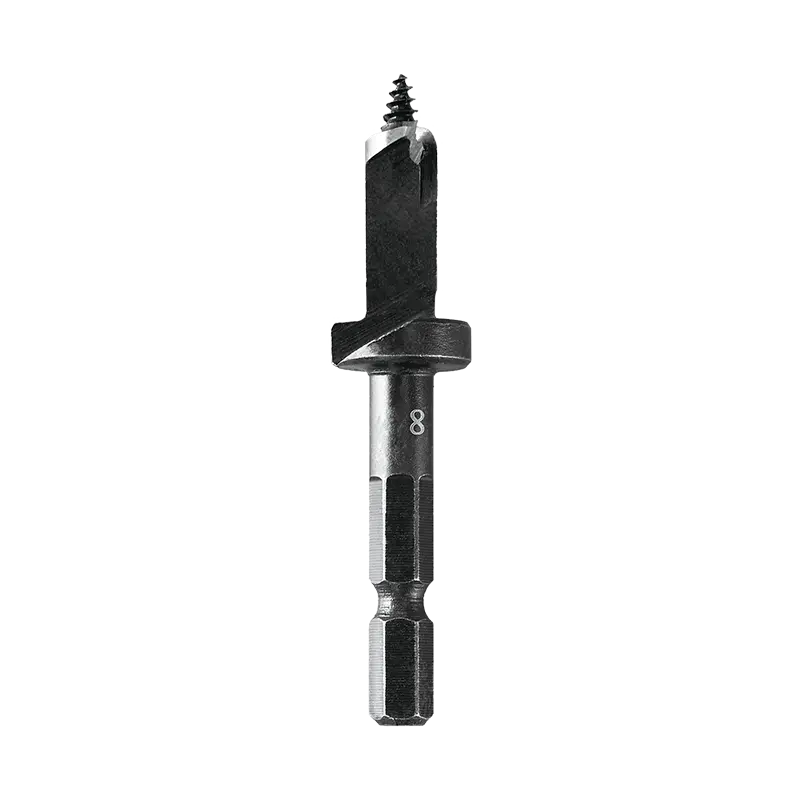
The brace drill — a hand-cranked tool with a U-shaped frame that allowed continuous unidirectional rotation — appeared in northern Europe around the 15th century and represented the first tool capable of sustained rotational drilling without the back-and-forth motion of the bow drill. Braces used interchangeable spoon bits and later twist-style bits, and remained standard woodworking tools well into the 20th century.
The Industrial Revolution transformed drilling from a craft technique into a precision manufacturing process. The introduction of cast iron and steel machine tools in the late 18th century made it possible to bore holes to consistent diameters and depths, a prerequisite for the interchangeable parts manufacturing that underpinned industrial mass production. James Nasmyth and other 19th-century engineers developed drill presses with mechanised feed and speed control, taking the physical load off the operator and enabling repeatable results.
The standard twist drill geometry used in virtually all metal drilling today was patented by Ambrose Swasey and developed commercially by Stephen Morse in the United States in the 1860s. Morse's helical flute design — still the dominant drill bit geometry 160 years later — provided far superior chip evacuation compared to the spoon and flat drill bits that preceded it, enabling deeper holes at higher feed rates without packing and jamming.
The development of high-speed steel (HSS) at the turn of the 20th century was the most important advance in drill bit material since the adoption of hardened steel. HSS — an alloy of iron, tungsten, chromium, and vanadium — retains its hardness at temperatures up to approximately 600 °C, compared to around 200 °C for plain carbon steel. This allowed drilling at cutting speeds two to three times faster than previously possible, dramatically increasing machining productivity in early 20th-century factories.
Cemented tungsten carbide, developed in Germany in the 1920s by Krupp, introduced a material with hardness approaching that of diamond. Carbide-tipped and solid carbide drill bits could machine hardened steels, cast iron, and abrasive composites that rapidly destroyed HSS tooling. By the 1950s, carbide indexable inserts and brazed-tip drills were standard in high-production machining. Today, solid carbide microdrills as small as 0.1 mm diameter are routine in PCB manufacturing and precision medical device production.
The introduction of the portable electric drill — pioneered by Wilhelm Fein of Germany in 1895 and made widely accessible by Black & Decker's consumer model in 1916 — brought drilling capability out of the machine shop and onto construction sites and into homes. The cordless drill, commercialised from the 1960s onward and transformed by lithium-ion battery technology in the 2000s, completed the democratisation of drilling, making professional-grade hole-making accessible to any user.
Contemporary drill bit development focuses on coatings, geometry optimisation, and specialised materials rather than fundamental design changes. Titanium nitride (TiN), titanium aluminium nitride (TiAlN), and diamond-like carbon (DLC) coatings applied by physical vapour deposition (PVD) process reduce friction, increase surface hardness, and extend tool life by factors of 3× to 10× compared to uncoated equivalents in demanding applications.
Polycrystalline diamond (PCD) drill bits represent the current performance ceiling for non-ferrous machining, used in aerospace aluminium, carbon fibre composite, and silicon machining where surface finish and tool life requirements exceed what carbide can deliver. For construction and masonry, polycrystalline diamond compact (PDC) technology — originally developed for oil and gas rotary drilling — has migrated into hammer drill bits for concrete and stone, offering dramatically longer service life than conventional tungsten carbide inserts.
I. Introduction: Solving the "Impossible" Task The phrase "fitting a square peg into a round hole" is a universal symbol...
READ MOREMetalworking has always been a cornerstone of industrial development, shaping everything from automotive components to a...
READ MORE1. What Are Waterpump Pliers? – The Flexible “All-Rounder” Tool In modern industrial manufacturing and daily maintenance...
READ MORESelecting the appropriate industrial cutting tools is a critical decision that directly impacts manufacturing efficiency...
READ MORE
+86-573-84611229

+86-573-84611518


NO.35 Yucao Road, Ganyao Town, Jiashan City, Zhejiang Province, China
