

 中文简体
中文简体 English
 русский
 Inquiry
Don't hesitate to send a message
I. Introduction: Solving the "Impossible" Task The phrase "fitting a square peg into a round hole" is a universal symbol...
READ MOREContent
A drill bit is a cutting tool designed to remove material and create holes in a workpiece. It attaches to a drill — handheld, benchtop, or machine-mounted — and rotates at speed, with the cutting edges shearing or abrading material as the bit advances. The term "drill bit" technically refers to the removable cutting end rather than the drill itself, though in everyday use the two words are often used interchangeably.
The geometry of a drill bit determines almost everything about its performance: how efficiently it cuts, how much heat it generates, and whether it suits hard or soft materials. Most bits share the same basic anatomy — a shank that fits into the drill chuck, a fluted body that carries chips and debris out of the hole, and a cutting tip engineered for a specific material class.
Drill bits are manufactured from a range of materials, including high-speed steel (HSS), cobalt alloy, solid carbide, and carbide-tipped steel. Coatings such as titanium nitride (TiN), black oxide, and diamond-like carbon (DLC) are applied to extend cutting life, reduce friction, and improve heat resistance. The combination of substrate material and coating defines how long a bit lasts and how aggressively it can be run.
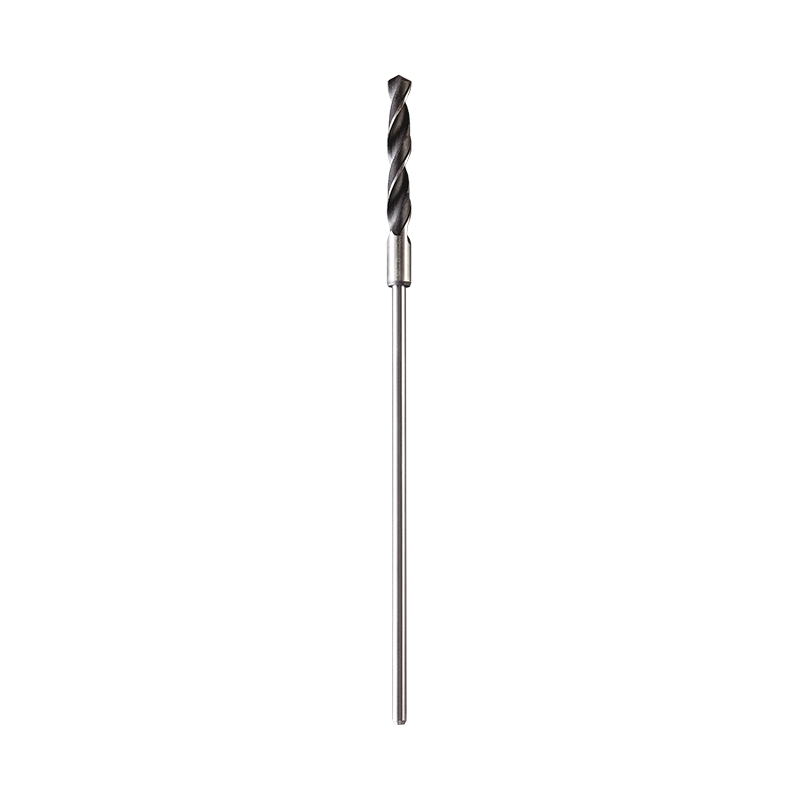
Choosing the wrong bit type is one of the most common causes of poor hole quality, premature tool wear, and damaged workpieces. The table below summarizes the most widely used drill bit types alongside their primary applications and key characteristics.
| Bit Type | Best For | Key Feature |
|---|---|---|
| Twist Bit (HSS) | Wood, plastic, soft metals | General-purpose; widest size range |
| Cobalt Bit | Stainless steel, hardened metals | Heat-resistant; retains hardness at high temps |
| Masonry Bit | Brick, concrete, stone, block | Tungsten carbide tip; used with hammer action |
| Auger Bit | Deep holes in timber and wood | Aggressive flute; self-feeding screw tip |
| Spade (Paddle) Bit | Large-diameter holes in wood | Fast, coarse cutting; less clean finish |
| Forstner Bit | Flat-bottomed holes in wood | Precise, clean edges; used in cabinetry |
| Step Bit | Sheet metal, thin materials | Drills multiple diameters with one bit |
| Hole Saw | Large-diameter cutouts in wood, drywall, metal | Annular cut; leaves core intact |
| Brad-Point Bit | Precision woodworking | Center spur prevents walking; clean entry |
| Diamond Core Bit | Ceramic tile, glass, porcelain | Diamond-sintered rim; requires water cooling |
The standard HSS twist bit remains the most widely used drill bit in workshops, job sites, and manufacturing facilities worldwide. Its helical flutes efficiently evacuate chips from the hole, and it is available in diameters from under 1 mm to 25 mm and beyond. For general-purpose drilling in wood, plastic, and aluminum, an HSS twist bit coated with black oxide or titanium is the practical starting point for most tasks.
When working with harder metals — particularly stainless steel grades such as 304 or 316 — cobalt twist bits (M35 or M42 grades, containing 5–8% cobalt) are the correct tool. Cobalt alloy retains its hardness at temperatures that would quickly soften ordinary HSS, which is why cobalt bits can be run faster and last significantly longer in tough ferrous materials.
The auger drill bit is specifically engineered for boring deep, clean holes through timber and structural lumber. Its defining features are a self-feeding threaded tip — which pulls the bit into the wood without excessive downward pressure — and a wide, open flute that aggressively clears shavings from deep holes. This combination prevents the bit from clogging or burning, which is a common failure mode when using standard twist bits at depth.
Auger bits are available in diameters typically ranging from 6 mm to 38 mm, and lengths from standard (around 190 mm) to ship auger lengths exceeding 450 mm. Common applications include boring holes for structural bolts, routing cable and pipe through wall studs and floor joists, and installing posts or beams. Because the screw tip draws the bit forward automatically, auger bits are particularly well-suited to high-torque, low-speed drills and auger-style power tools.
One limitation of auger bits is material compatibility: they are designed exclusively for wood and wood-based materials. Using an auger bit on masonry, metal, or tile will damage the tip and produce a poor result. For very large-diameter holes in wood where a flat-bottomed result is needed, a Forstner bit is the more appropriate alternative — though it lacks the self-feeding action and depth capacity of an auger.
Masonry drill bits are purpose-built for drilling into hard, brittle materials: concrete, brick, mortar, natural stone, cinder block, and ceramic tile. They are entirely unsuitable for metal or wood and will quickly dull if used on those materials.
The distinguishing feature of a masonry bit is its tungsten carbide tip, brazed or pressed onto an HSS or steel body. Tungsten carbide is significantly harder than concrete, rating approximately 9–9.5 on the Mohs scale compared to concrete's 6–7, which allows the tip to chip and abrade the material rather than cut it in the traditional sense.
Masonry bits work best with a hammer drill rather than a standard rotary drill. The hammer mechanism delivers rapid axial blows — typically 10,000–50,000 BPM (blows per minute) depending on the tool — that fracture the material ahead of the tip while the rotation clears the debris. Using a masonry bit in rotation-only mode is possible in softer materials like brick or block, but it significantly increases drilling time and bit wear. For dense reinforced concrete, an SDS-Plus or SDS-Max hammer drill with SDS-shank masonry bits is the industry standard.
Typical applications for masonry drill bits include:
Masonry bit size must match the wall plug or anchor being used. If the drilled hole is 1 mm oversize, load-bearing capacity of the anchor can drop by 20–30%, so bit diameter selection is not purely a fit issue — it directly affects structural integrity in load-bearing applications.
Selecting a drill bit comes down to four variables: workpiece material, required hole diameter, required hole depth, and finish quality. Getting any one of these wrong leads to oversized holes, damaged surfaces, broken bits, or premature wear.
The most fundamental rule: never cross material categories. Using a wood bit on masonry shatters the tip; using a masonry bit on steel produces no useful cutting action. When the material is unknown — common when drilling into older buildings or composite structures — start conservatively with a general-purpose HSS bit and switch to a specialist type if resistance or bit condition indicates a different substrate.
As a general rule, drill speed (RPM) should decrease as bit diameter increases. Larger bits have higher peripheral cutting speeds at the same RPM, generating more heat and stress at the cutting edge. Manufacturers publish recommended speed ranges by diameter and material; following these guidelines substantially extends bit life. For deep holes — deeper than 5× the bit diameter — chip evacuation becomes critical. Auger bits handle this natively through their open-flute design; standard twist bits require periodic withdrawal to clear chips, especially in wood and plastic.
For applications where hole quality matters — clean entry and exit faces, tight diameter tolerance, flat bottoms — the choice of bit type is as important as the cutting parameters. Brad-point bits prevent wandering on wood surfaces. Forstner bits produce flat-bottomed recesses with smooth walls. Step bits eliminate the burr that forms when a standard twist bit exits thin sheet metal. Diamond core bits allow clean penetration of tile and glass without cracking or chipping the glaze, provided water cooling is used to manage heat at the cutting face.
A dull drill bit is inefficient, generates excessive heat, and produces oversized or rough holes. The point at which a bit requires sharpening or replacement is usually indicated by increased feed pressure, a burning smell, discoloration of the bit shank, or visible rounding of the cutting lips.
HSS twist bits can be resharpened using a bench grinder, drill bit sharpener, or sharpening jig — provided the correct point angle is maintained. For general-purpose drilling in metal and wood, the standard included point angle is 118°. For harder or more abrasive materials, a 135° split-point geometry is preferable, as it reduces the chisel edge width at the center, lowering the thrust force required to start the hole and improving self-centering performance.
Masonry bits with carbide tips can be resharpened using a green silicon carbide wheel, though the carbide tip geometry is more difficult to restore precisely. For most trade applications, replacing masonry bits when worn is more cost-effective than sharpening. Cobalt and solid carbide bits are typically resharpened by specialist regrinding services rather than on-site.
Storage matters as much as sharpening. Loose bits rattling in a drawer damage their cutting edges through contact with other tools. Indexed drill bit sets stored in fitted cases or bit rolls preserve edge geometry and extend usable life significantly over unorganized storage.
I. Introduction: Solving the "Impossible" Task The phrase "fitting a square peg into a round hole" is a universal symbol...
READ MOREMetalworking has always been a cornerstone of industrial development, shaping everything from automotive components to a...
READ MORE1. What Are Waterpump Pliers? – The Flexible “All-Rounder” Tool In modern industrial manufacturing and daily maintenance...
READ MORESelecting the appropriate industrial cutting tools is a critical decision that directly impacts manufacturing efficiency...
READ MORE
+86-573-84611229

+86-573-84611518


NO.35 Yucao Road, Ganyao Town, Jiashan City, Zhejiang Province, China
