

 中文简体
中文简体 English
 русский
 Inquiry
Don't hesitate to send a message
I. Introduction: Solving the "Impossible" Task The phrase "fitting a square peg into a round hole" is a universal symbol...
READ MOREContent
A cutting bit for a drill is the interchangeable tip that performs the actual material removal; the drill itself only supplies rotation and axial feed force. This separation between tool and drive is one of the most productive design decisions in hand tool history — a single drill body can accept hundreds of different bit types and sizes, each optimised for a specific material or hole geometry. Matching the correct cutting bit to the material being drilled is the single most important factor in drilling performance, tool life, and hole quality. Using the wrong bit type not only produces poor results but can damage both the bit and the workpiece.
The helical twist drill bit is the most widely used cutting bit across all drilling applications. Available from under 1 mm to over 100 mm diameter, twist bits are manufactured in three primary material grades that define their application range:
Point angle is a frequently overlooked specification. The standard 118° included angle suits general-purpose drilling in mild steel and wood. A 135° split-point geometry self-centres on smooth surfaces without a centre punch, reduces thrust force, and is better suited to hard materials and thin sheet metal where a 118° bit tends to walk and grab.
Masonry cutting bits use a tungsten carbide tip brazed to a steel body. The carbide — far harder than the steel or aggregate particles in concrete — pulverises the material at the hole base rather than cutting it in the conventional sense. The rotary hammer action of a hammer drill or SDS drill delivers repeated impact blows that fracture the material ahead of the tip while rotation clears debris through the flutes.
SDS-Plus and SDS-Max shank systems, developed by Bosch and now industry-standard, allow the bit to slide axially within the chuck during hammering while remaining rotationally engaged. This transmits hammer energy efficiently to the tip without the energy losses of older keyed-chuck hammer systems. SDS-Plus is standard for bits up to 26 mm diameter; SDS-Max handles larger diameters and heavy-duty breaking work.
For larger holes in concrete (above 50 mm), diamond core bits replace solid masonry bits. A steel tube with diamond segments on the cutting face rotates without hammer action, using water or dry cutting with diamond abrasion to produce clean-walled holes for plumbing, electrical conduit, and structural penetrations.
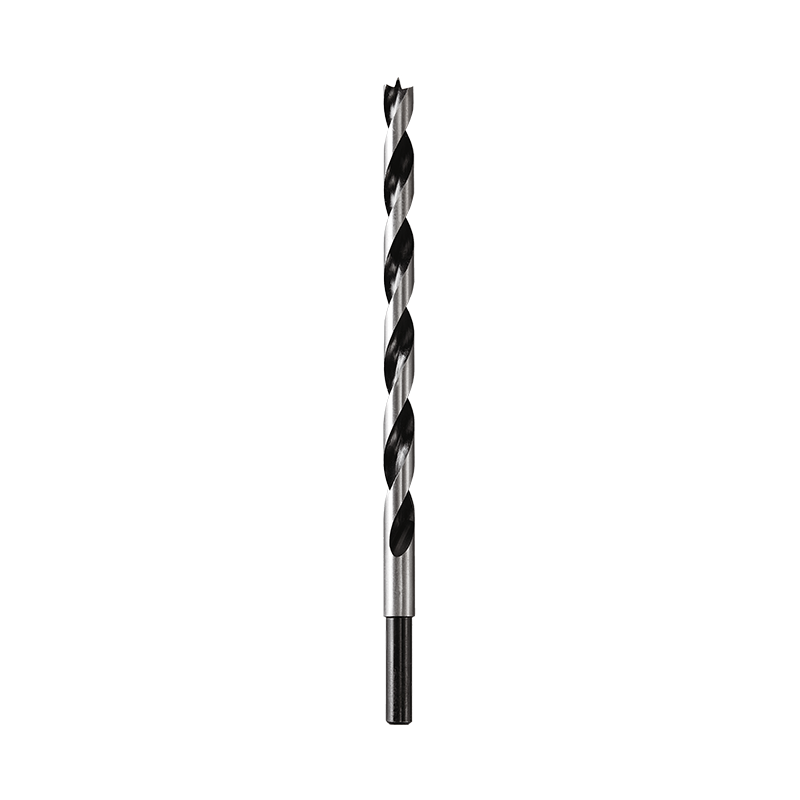
Wood requires different cutting geometry from metal because the fibrous grain structure tears rather than shears if the bit geometry is poorly matched to the application:
| Bit Type | Material | Primary Use |
|---|---|---|
| Step drill bit | HSS or cobalt HSS | Multiple hole sizes in thin sheet metal |
| Glass and tile bit | Tungsten carbide spear point | Ceramic tile, glass, porcelain |
| Countersink bit | HSS | Recessing screw heads flush in wood/metal |
| Hole saw | Bimetal HSS or carbide grit | Large diameter holes in wood, metal, drywall |
| Self-feed bit | Carbon or HSS | Large holes in thick structural timber |
The correct bit selection follows directly from the workpiece material and the required hole quality:
I. Introduction: Solving the "Impossible" Task The phrase "fitting a square peg into a round hole" is a universal symbol...
READ MOREMetalworking has always been a cornerstone of industrial development, shaping everything from automotive components to a...
READ MORE1. What Are Waterpump Pliers? – The Flexible “All-Rounder” Tool In modern industrial manufacturing and daily maintenance...
READ MORESelecting the appropriate industrial cutting tools is a critical decision that directly impacts manufacturing efficiency...
READ MORE
+86-573-84611229

+86-573-84611518


NO.35 Yucao Road, Ganyao Town, Jiashan City, Zhejiang Province, China
