Complete List of Tools Used in Building Construction
Building construction relies on a wide range of tools — from basic hand tools to heavy mechanized equipment. Understanding what tools are needed on a construction site, and why each one matters, helps contractors, project managers, and site supervisors plan more effectively, control costs, and maintain safety standards. Below is a structured breakdown of the most important construction tools by category.
| Category |
Examples |
Primary Use |
| Hand Tools |
Hammer, chisel, hand saw, tape measure |
Cutting, fastening, measuring |
| Power Tools |
Circular saw, drill, angle grinder |
High-speed cutting, drilling, grinding |
| Measuring & Layout Tools |
Level, theodolite, laser level |
Alignment, grading, surveying |
| Concrete & Masonry Tools |
Concrete mixer, trowel, vibrator |
Mixing, placing, finishing concrete |
| Heavy Equipment |
Excavator, bulldozer, crane |
Earthmoving, lifting, demolition |
| Safety Equipment |
Hard hat, harness, safety boots |
Worker protection on site |
Overview of building construction tools by category and primary function.
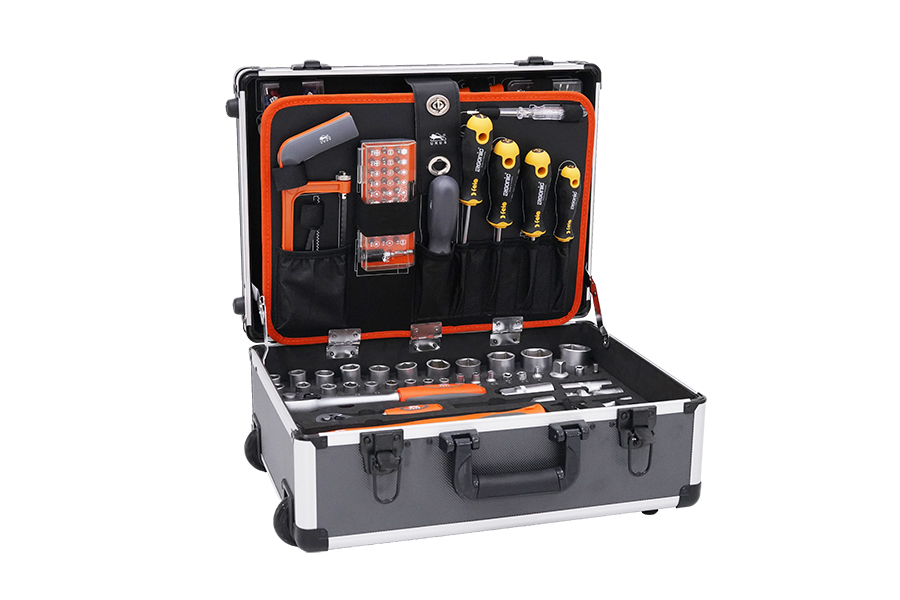
Hand Tools: The Foundation of Every Construction Tool List
Despite advances in power tools and machinery, hand tools remain indispensable on every construction site. They are precise, portable, require no power source, and excel at tasks that machines cannot perform efficiently in tight spaces.
Hammers and Mallets
The claw hammer is the most universal tool in construction — used for driving nails, pulling fasteners, and light demolition. Framing hammers, heavier at 20–32 oz, are preferred in structural carpentry for driving large nails into lumber. Rubber mallets are used when force is needed without surface damage, especially in tile setting and form assembly.
Chisels and Scrapers
Cold chisels cut through masonry and metal without electricity. Wood chisels shape joints and trim materials to fit. On concrete-heavy projects, bolster chisels are used alongside hammers to cut brick and block cleanly.
Measuring and Marking Tools
- Tape measure — standard lengths of 25 ft to 100 ft for layout work
- Chalk line — snaps straight reference lines across large surfaces
- Speed square — checks 90° and 45° angles in framing
- Combination square — verifies both depth and angle simultaneously
- Plumb bob — establishes true vertical reference for walls and columns
Saws
Hand saws are divided by tooth count (TPI). Low TPI blades (4–8) cut fast through rough lumber; high TPI blades (12–20) produce finer cuts for trim and finishing. Hacksaws handle metal pipe and conduit. Compass and keyhole saws are used for curved or internal cuts in drywall and panels.
Wrenches, Pliers, and Fastening Tools
- Adjustable wrench — tightens bolts and nuts in structural connections
- Locking pliers (Vise-Grips) — clamp and hold materials during assembly
- Pipe wrench — grips and turns threaded pipes in plumbing rough-in
- Screwdrivers — flat-head and Phillips for manual fastening in finish work
Power Tools Used in the Construction Industry
Power tools multiply productivity on a construction site. A skilled worker with the right power tool can complete in minutes what would take hours by hand. The construction industry runs on a core set of corded and cordless power tools for cutting, drilling, fastening, and finishing.
Drills and Drivers
Cordless hammer drills are the workhorse of construction sites — capable of drilling into concrete, wood, and metal. Impact drivers deliver high rotational torque for driving large screws and lag bolts into framing lumber. Right-angle drills access confined spaces behind pipes and in wall cavities. For heavy-duty anchor installation in concrete, rotary hammer drills (SDS-Plus or SDS-Max) are the standard tool — they combine rotation with a hammering action to penetrate masonry without overheating the bit.
Saws
- Circular saw — primary tool for ripping and cross-cutting dimensional lumber and sheet goods; blade diameters of 7¼ inches cover most framing tasks
- Reciprocating saw (Sawzall) — demolition and rough cuts in walls, pipes, and subfloors
- Miter saw (chop saw) — precise angle cuts for trim, molding, and rafters
- Table saw — ripping sheet panels and long boards on larger job sites
- Jigsaw — curved or irregular cuts in drywall, plywood, and countertops
Angle Grinders
The angle grinder is one of the most versatile tools used in the construction industry. With the right disc, it cuts rebar, grinds weld seams, removes rust, cuts ceramic tile, and polishes metal surfaces. Standard sizes are 4½ inches (light work) and 7 inches (heavy grinding and cutting).
Nail Guns and Staplers
Pneumatic framing nailers drive 3–3½ inch nails into structural lumber at a rate impossible to match manually. Finish nailers handle trim and casing. Roofing coil nailers handle shingle attachment rapidly across large roof decks. These tools require an air compressor with an appropriate CFM rating — typically 4–6 CFM at 90 PSI for framing nailers.
Planers, Sanders, and Routers
- Belt sander — heavy stock removal on wood floors and surfaces
- Orbital sander — finish sanding on drywall, cabinetry, and trim
- Electric planer — shaving doors and lumber for precise fit
- Router — cutting edge profiles, dadoes, and grooves in millwork
Concrete and Masonry Tools: Names and Functions
Concrete and masonry work requires a specialized set of tools not found in standard carpentry. These tools handle the mixing, placing, consolidating, and finishing of concrete and masonry assemblies — tasks that demand both speed (before concrete sets) and precision.
Mixing and Transporting
- Concrete mixer (drum mixer) — rotary drum blends cement, aggregate, and water into uniform mix; capacities range from 1.5 to 9 cubic feet for job site use
- Wheelbarrow — transports fresh concrete short distances on site
- Concrete pump — delivers concrete via pipeline to elevated or remote pour locations
- Mortar mixer — dedicated mixer for masonry mortar and stucco applications
Placing, Consolidating, and Finishing
- Concrete vibrator — removes air voids and ensures consolidation around rebar; internal (immersion) types are most common
- Screed board — strikes off excess concrete to achieve a level surface
- Bull float — smooths and closes the surface of freshly screeded slabs
- Steel trowel — produces a dense, smooth finish on concrete floors
- Power trowel (helicopter) — mechanized float for large slab areas, achieving a burnished finish
- Edger and groover — forms control joints and rounded edges before concrete cures
Masonry Tools
- Brick trowel — applies and spreads mortar beds for brick and block laying
- Jointer (striking iron) — compresses and profiles mortar joints for a finished appearance
- Brick hammer and bolster chisel — cuts brick and block to required dimensions
- Mason's line (string line) — guides horizontal coursing in brick and block walls
- Tile saw (wet saw) — cuts ceramic, porcelain, and stone tile with water-cooled diamond blade
Measuring and Layout Tools on a Construction Site
Precision in construction begins with accurate measurement and layout. Errors at the layout stage compound through every subsequent trade — a wall framed 2 inches off-plan can misalign windows, doors, and mechanical runs downstream. The following tools ensure that dimensions and levels are established correctly before any building begins.
Leveling Tools
- Spirit level (bubble level) — 24-inch and 48-inch versions for checking walls, frames, and surfaces
- Laser level — projects horizontal or vertical reference lines across a room or floor plate; self-leveling models increase speed significantly
- Rotary laser level — rotates 360° to establish a continuous level plane across large floor or ceiling areas
- Optical level (builder's level) — used in site grading and foundation layout over long distances
Surveying and Layout Equipment
- Theodolite — measures horizontal and vertical angles with high precision for site control points
- Total station — combines electronic distance measurement with angle reading; replaces multiple instruments on complex projects
- GPS/GNSS layout tools — used on large civil projects for machine control and stakeout
- Measuring wheel — measures walking distances along irregular or unpaved terrain
Distance and Depth Measurement
- Laser distance measurer — instantly measures distances up to 200 ft with ±1/16 inch accuracy; replaces two-person tape measure teams
- Depth gauge — measures mortise depth, fastener embedment, and concrete cover over rebar
- Stud finder — locates framing members and utilities behind finished drywall
Building Construction Equipment List: Heavy Machinery
Large-scale construction projects require mechanized equipment that no hand or power tool can replicate. Heavy construction equipment handles earthmoving, material lifting, compaction, and site preparation — tasks involving thousands of tons of material and forces measured in hundreds of horsepower.
Earthmoving Equipment
- Excavator (hydraulic shovel) — digs foundations, trenches, and utility runs; bucket sizes range from 0.1 m³ (mini excavators) to 3+ m³ (large class machines)
- Bulldozer — pushes and levels large volumes of soil and debris; track-mounted for stability on uneven ground
- Motor grader — fine-grades road subgrade and creates precise slopes; critical in road construction and site drainage
- Skid steer loader — compact, highly maneuverable; handles material movement in tight job sites and basement excavations
- Backhoe loader — combines front loader and rear excavator; one of the most common pieces of equipment on residential and light commercial sites
Lifting Equipment
- Tower crane — permanent fixture on high-rise projects; lifts structural steel, concrete buckets, and prefab components to heights exceeding 300 m
- Mobile crane (crawler or truck-mounted) — flexible lifting for structural steel erection, precast placement, and heavy HVAC equipment
- Telescopic handler (telehandler) — extends boom reach for placing materials on elevated floors without a crane
- Aerial work platform (scissor lift, boom lift) — elevates workers to heights up to 185 ft for exterior cladding, glazing, and MEP installation
Compaction Equipment
- Vibratory plate compactor — compacts granular soils and gravel base in shallow lifts; standard for utility trenches and paving sub-bases
- Jumping jack (rammer compactor) — ideal for cohesive soils and confined spaces such as trench backfill
- Smooth drum roller — compacts asphalt paving and road base material over wide areas
Concrete Delivery Equipment
- Ready-mix concrete truck (transit mixer) — delivers mixed concrete from batching plant to job site, maintaining mix consistency during transport
- Concrete boom pump — truck-mounted pump with articulating arm that places concrete precisely at elevated or distant pour locations
What Tools Are Needed on a Construction Site: Trade-Specific Requirements
A construction site brings together multiple trades simultaneously — each with its own specialized toolset. Coordinating tool procurement and scheduling across trades is a core project management responsibility. Here is a breakdown by trade.
Carpentry and Framing
- Framing hammer or pneumatic framing nailer
- Circular saw and miter saw
- Carpenter's square and speed square
- Level (48-inch minimum for wall framing)
- Pry bar and cat's paw
- Chalk line and marking pencil
Electrical Work
- Wire strippers and cable cutters
- Conduit bender (hand and hydraulic)
- Fish tape and cable puller for wire pulling
- Multimeter and non-contact voltage tester
- Knockout punch for panel box penetrations
Plumbing
- Pipe cutter and pipe threader
- Press tool (for ProPress fittings) or torch and solder kit
- Pipe wrench (12-inch and 18-inch)
- Basin wrench for under-fixture work
- Drain snake and hydro-jetter for clearing lines
Roofing
- Roofing coil nailer and pneumatic stapler
- Roofing hammer (hatchet style) with gauge
- Utility knife with hook blades for shingle cutting
- Chalk line and tape measure for layout
- Heat gun or torch for modified bitumen membrane work
Drywall and Finishing
- Drywall screw gun with adjustable clutch
- Utility knife and T-square for scoring and snapping panels
- Drywall lift for ceiling installation
- Taping knives (6-inch, 10-inch, 12-inch) and mud pan
- Corner bead crimper and automatic taper
Safety Equipment: The Non-Negotiable Tools on Every Site
No construction tools list is complete without personal protective equipment (PPE) and site safety tools. Construction is one of the most hazardous industries globally — OSHA data consistently shows falls, struck-by incidents, electrocution, and caught-in/between hazards as the four leading causes of fatalities. The right safety equipment is not optional; it is a legal requirement and a fundamental professional standard.
Personal Protective Equipment (PPE)
- Hard hat (Class E, G, or C depending on hazard) — protects against falling objects and overhead impact
- Safety glasses and face shield — eye protection during cutting, grinding, and drilling operations
- High-visibility vest — required in all areas where vehicles or equipment operate
- Steel-toe or composite-toe safety boots — foot protection against dropped tools and compression hazards
- Hearing protection (earplugs or earmuffs) — required when ambient noise exceeds 85 dB; prolonged exposure without protection causes permanent hearing damage
- Respirator (N95 or P100) — protects against silica dust from concrete cutting, lead dust in renovation, and chemical fumes
- Work gloves — cut-resistant for sheet metal and rebar; chemical-resistant for adhesives and solvents
Fall Protection Equipment
- Full-body harness — OSHA requires fall protection at heights of 6 feet or more in construction
- Self-retracting lifeline (SRL) — absorbs fall energy and arrests drops within inches
- Guardrail systems and safety netting — passive fall protection for open edges and floor openings
- Ladder (Type I or IA) and stepladder — Type IA handles 300 lb load for extra-heavy-duty commercial use
How to Build a Construction Tool List for Any Project
A well-prepared construction tools list reduces delays, prevents cost overruns, and ensures workers have what they need when they need it. The process of building one is straightforward when approached by phase.
Step 1: Break the Project Down by Phase and Trade
Every building construction project follows a sequence: site preparation → foundation → structural framing → envelope (roof, walls, windows) → MEP rough-in → insulation → drywall → finishes → commissioning. Identify which trades are active in each phase, then list the tools required for each trade's scope of work in that phase.
Step 2: Separate Owned, Rented, and Contractor-Supplied Tools
Heavy equipment — cranes, excavators, concrete pumps — is almost always rented or provided by specialty subcontractors. Power tools and hand tools are typically supplied by each trade. General contractors usually maintain a site tool inventory for shared-use items: ladders, levels, safety equipment, generators, and compressors. Tracking ownership prevents duplication costs and accountability gaps.
Step 3: Account for Consumables and Accessories
Tools are only as useful as their consumables. Saw blades, drill bits, grinding discs, nails, staples, and sandpaper all need to be included in procurement planning. On larger projects, running out of circular saw blades or drill bits mid-activity is a surprisingly common source of downtime — budget and order consumables proactively based on estimated quantities, not just what fits in a toolbox today.
Step 4: Plan for Maintenance and Calibration
Tools used in construction require regular maintenance to remain safe and accurate. Laser levels and total stations should be calibrated periodically against known benchmarks. Power tool guards and triggers should be inspected before each shift. Blades and bits should be replaced at defined wear thresholds — a dull blade requires more force, increasing both injury risk and material waste.


 中文简体
中文简体 English
 русский
 Inquiry


