

 中文简体
中文简体 English
 русский
 Inquiry
Don't hesitate to send a message
I. Introduction: Solving the "Impossible" Task The phrase "fitting a square peg into a round hole" is a universal symbol...
READ MOREContent
Drill bits are rotary cutting tools designed to create cylindrical holes in a workpiece by removing material through a combination of axial thrust and rotational force. The cutting edges at the tip shear away material while the helical flutes carry chips out of the hole, preventing clogging and heat buildup. The geometry, coating, and substrate material of a drill bit determine which applications it can handle reliably and how long it lasts under production conditions.
Carbide drill bits differ from high-speed steel (HSS) alternatives in a fundamental way: they are made from tungsten carbide, a compound roughly three times stiffer than steel, which allows higher cutting speeds, better edge retention, and far longer service life in hard or abrasive materials. For general-purpose drilling in wood or soft plastics, HSS is often adequate. For metal, composites, ceramics, or high-volume production runs, carbide is typically the correct choice.
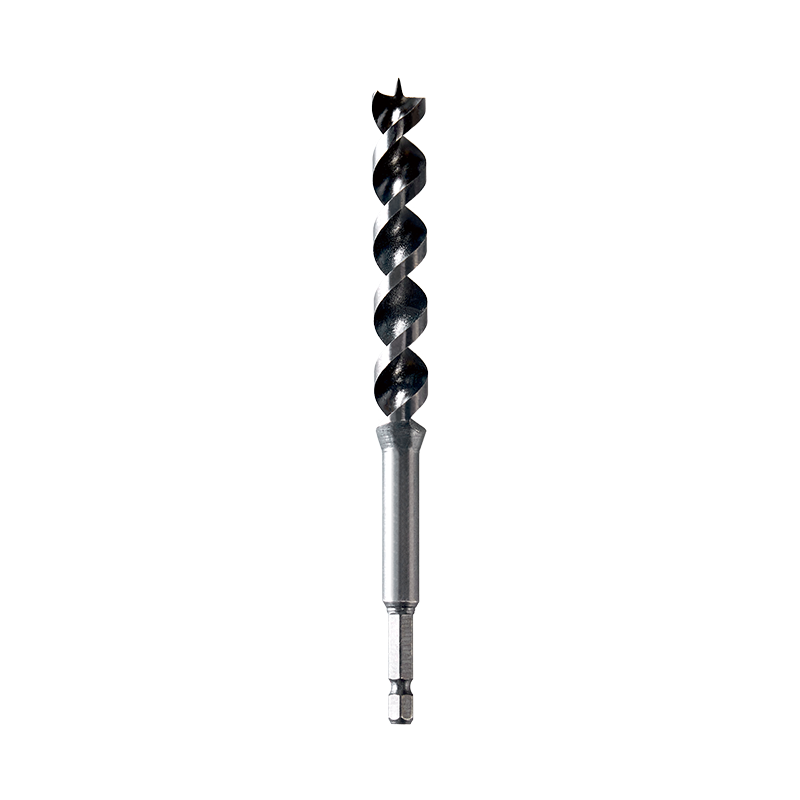
Carbide drill bits are specified across a wide range of industries and workpiece types. Understanding where each variant performs best helps avoid premature wear and poor hole quality.
Hardened steels above 45 HRC and gray cast iron contain abrasive microstructures that rapidly dull HSS edges. Solid carbide drill bits maintain cutting geometry at surface speeds of 80–200 m/min in these materials, compared to 15–30 m/min for uncoated HSS. TiAlN or AlCrN coatings further extend tool life by providing thermal insulation at the cutting edge, which is critical when dry or minimum-quantity lubrication (MQL) drilling is required.
Austenitic stainless steels work-harden rapidly under the cutting edge. Carbide drill bits with a split-point geometry and a 135° point angle reduce the thrust force needed to penetrate the surface, limiting work hardening. In nickel superalloys such as Inconel 718, carbide drill bits with through-coolant channels are standard because chip evacuation and thermal management directly control hole diameter tolerance and surface finish.
The abrasive carbon fibers in CFRP destroy HSS drill bits within a few holes. Carbide drill bits — particularly those with brad-point or dagger geometry — minimize delamination at entry and exit, which is a critical quality requirement in aerospace and automotive structural components. Tool life per regrind cycle is 5–10× longer than HSS in CFRP applications.
PCB drilling uses micro-grain carbide drill bits at spindle speeds of 100,000–300,000 RPM to produce via holes as small as 0.1 mm in diameter. The glass fiber reinforcement in FR4 substrates makes carbide the only practical substrate material at these diameters and cycle counts. A single carbide PCB drill bit may complete several thousand holes before requiring replacement.
The geometry of a carbide drill bit is not standardized — it is engineered for specific cutting conditions. Key parameters include:
| Coating | Max Service Temp. | Best For |
|---|---|---|
| Uncoated | ~500 °C | Non-ferrous metals, plastics, wet drilling |
| TiN | ~600 °C | General steel, reduced friction |
| TiAlN | ~900 °C | Hardened steels, dry cutting, alloy steels |
| AlCrN | ~1,100 °C | Nickel alloys, titanium, high-temp drilling |
| Diamond (CVD/PCD) | >1,200 °C | CFRP, ceramics, graphite, silicon |
Carbide substrate grade also plays a role. Fine-grain carbide (grain size below 1 µm) provides better edge sharpness and is preferred for small-diameter drills and finishing operations. Medium-grain grades offer improved toughness for interrupted cuts or drilling through scale and hardened surfaces.
Carbide drill bits deliver their full advantage only when used within the correct parameters. Common errors that lead to premature failure include running at incorrect speeds, using excessive or insufficient feed, and applying the wrong coolant strategy.
Cutting speed (surface meters per minute) is the primary variable to control. For carbide drilling medium carbon steel (e.g., 1045), a starting surface speed of 80–120 m/min is typical, with feed rates of 0.10–0.20 mm/rev depending on drill diameter. Running carbide too slowly causes rubbing rather than cutting, which generates heat and can lead to edge chipping. Running too fast in hard or abrasive materials accelerates flank wear and shortens tool life significantly.
Unlike HSS, carbide is brittle. Vibration from a worn spindle bearing, excessive tool overhang, or an unsupported workpiece concentrates stress at the cutting edge and causes chipping or drill breakage. Solid carbide drill bits below 6 mm diameter are particularly sensitive to runout — even 0.01 mm TIR (Total Indicator Reading) can shorten tool life by 30–50% in hard materials.
For holes deeper than three diameters, regular peck drilling cycles or through-coolant supply are necessary to clear chips before they pack the flutes. In stainless steel and titanium, flooded coolant at 40–100 bar internal pressure is preferred to control heat and prevent built-up edge formation. In CFRP, coolant is usually avoided because it can delaminate bonded layers — compressed air or vacuum extraction is used instead.
The choice between drill bit substrates comes down to workpiece hardness, production volume, and available machine rigidity.
I. Introduction: Solving the "Impossible" Task The phrase "fitting a square peg into a round hole" is a universal symbol...
READ MOREMetalworking has always been a cornerstone of industrial development, shaping everything from automotive components to a...
READ MORE1. What Are Waterpump Pliers? – The Flexible “All-Rounder” Tool In modern industrial manufacturing and daily maintenance...
READ MORESelecting the appropriate industrial cutting tools is a critical decision that directly impacts manufacturing efficiency...
READ MORE
+86-573-84611229

+86-573-84611518


NO.35 Yucao Road, Ganyao Town, Jiashan City, Zhejiang Province, China
